SEVEN YEARS LATER..

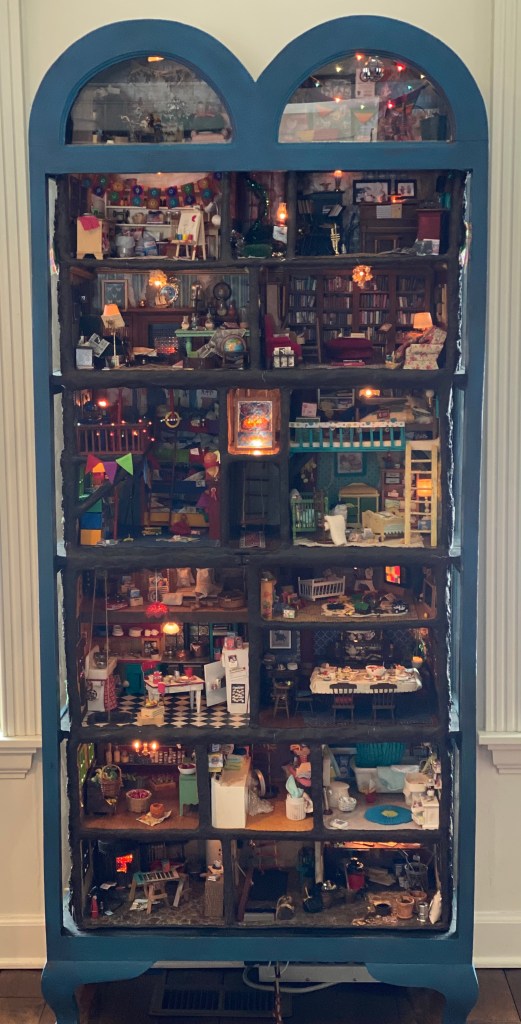
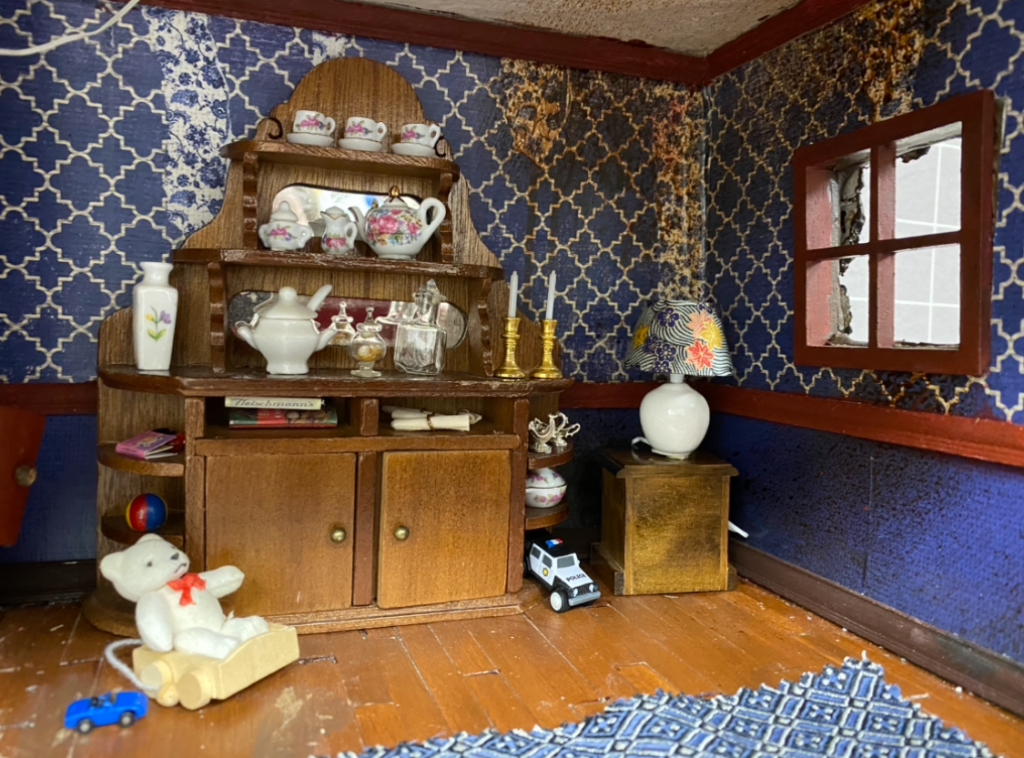
Right before the holidays, I emptied all of the rooms in the Mouse House so my husband Andy and our wonderful neighbor Patrick could carry the cabinet from my basement studio to our living room upstairs. I could hardly watch as electrical wires are in every room and I fretted that they would disconnect during the move. Miraculously, it all stayed intact and every light worked after I plugged it in.

The “refurnishing” took a couple of days and a few tweaks but I can finally say…

THE MOUSE HOUSE IS FINISHED!
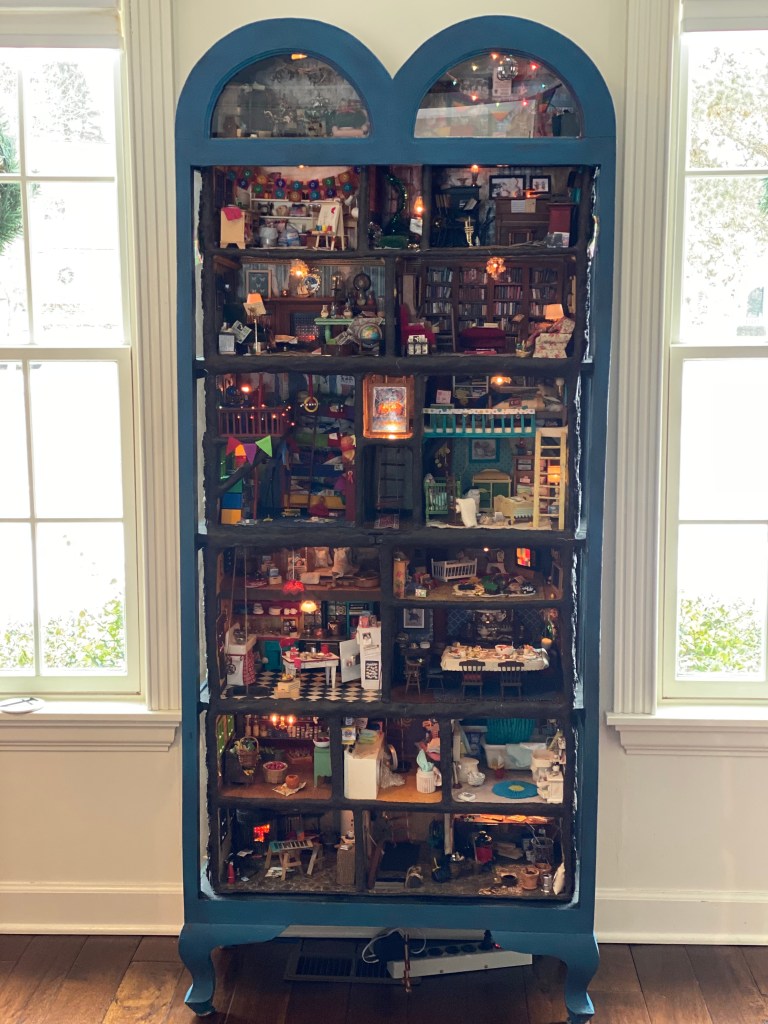
I gave myself ten years to build this and am proud to say I finished it in seven despite fairly normal life interruptions including; a five year high school volleyball coaching job; a basement flood and consequential remodel of my entire studio; an “almost” devastating fire (lots of sooty smoke!) in my basement closet five feet from the Mouse House; two sons leaving the nest; four deaths in our family; AND a three year move to California.

Below are photos of each room. There are LOTS more images throughout my blog with pictures of how I constructed everything as well as a better perspective as to the size of the rooms. (The scale I worked in is 1″ =1′.) Scroll way down into this blog for the many details.

THE BASEMENT ENTRY
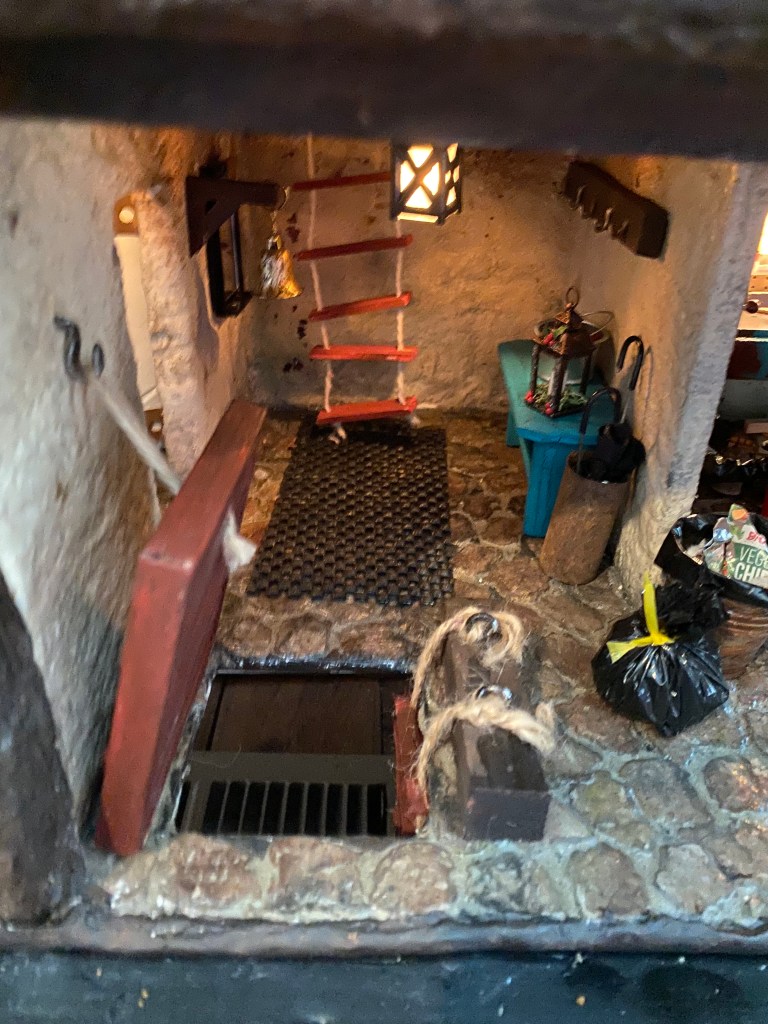

THE FURNACE ROOM
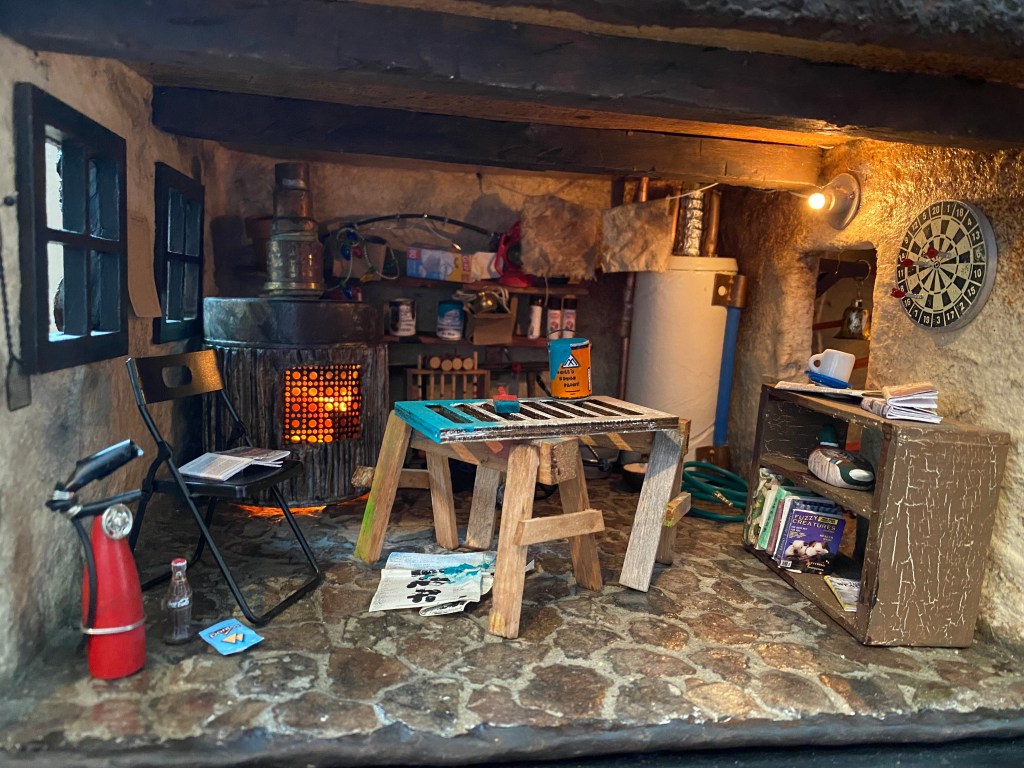

THE WORKSHOP
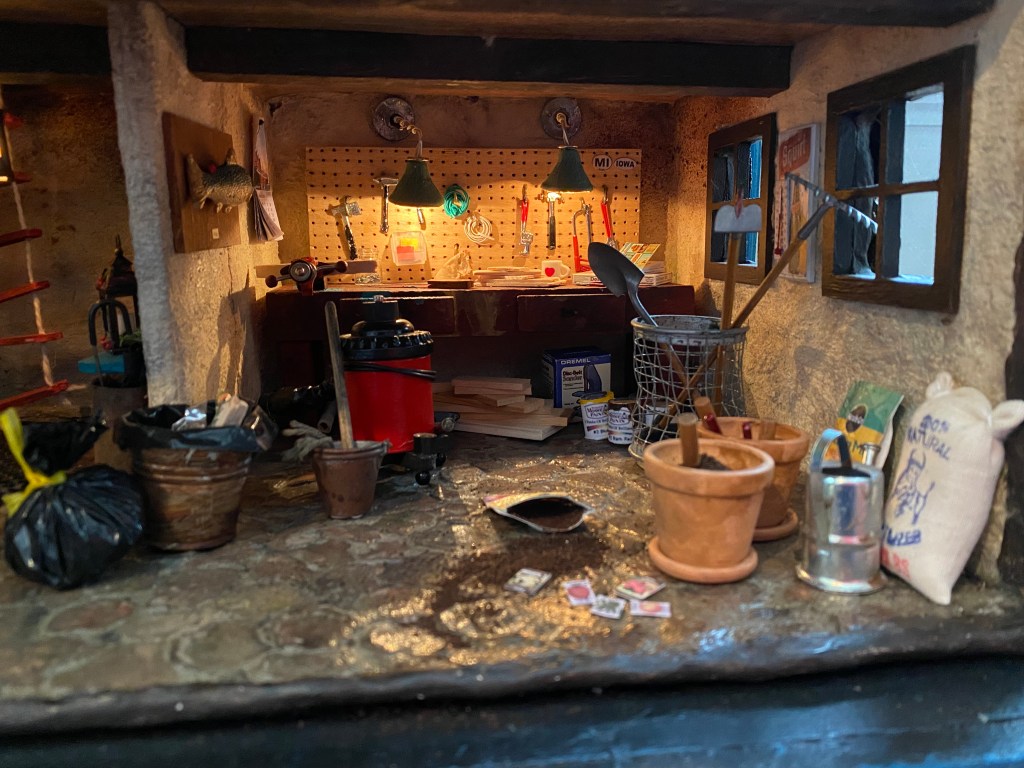

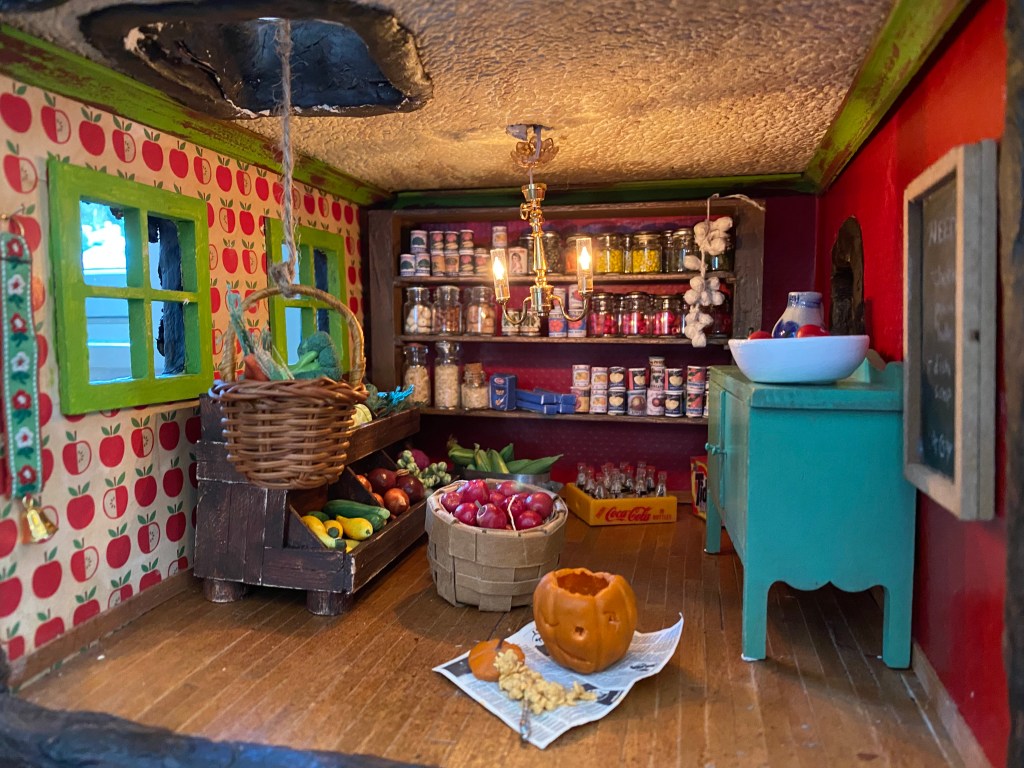
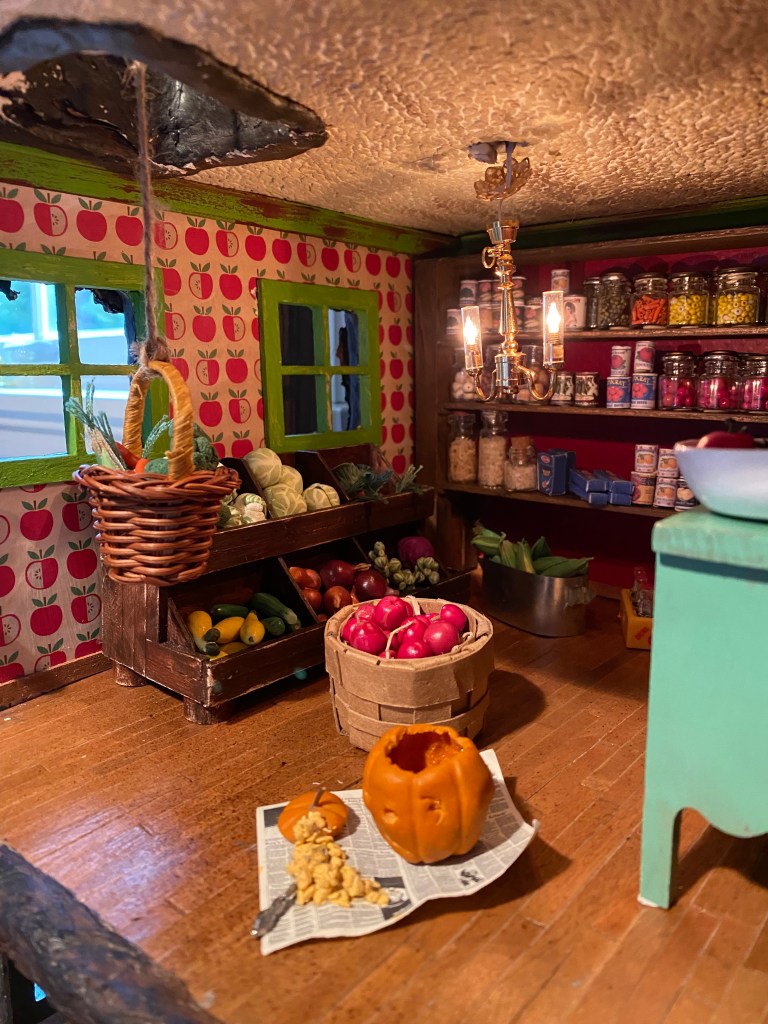
THE PANTRY
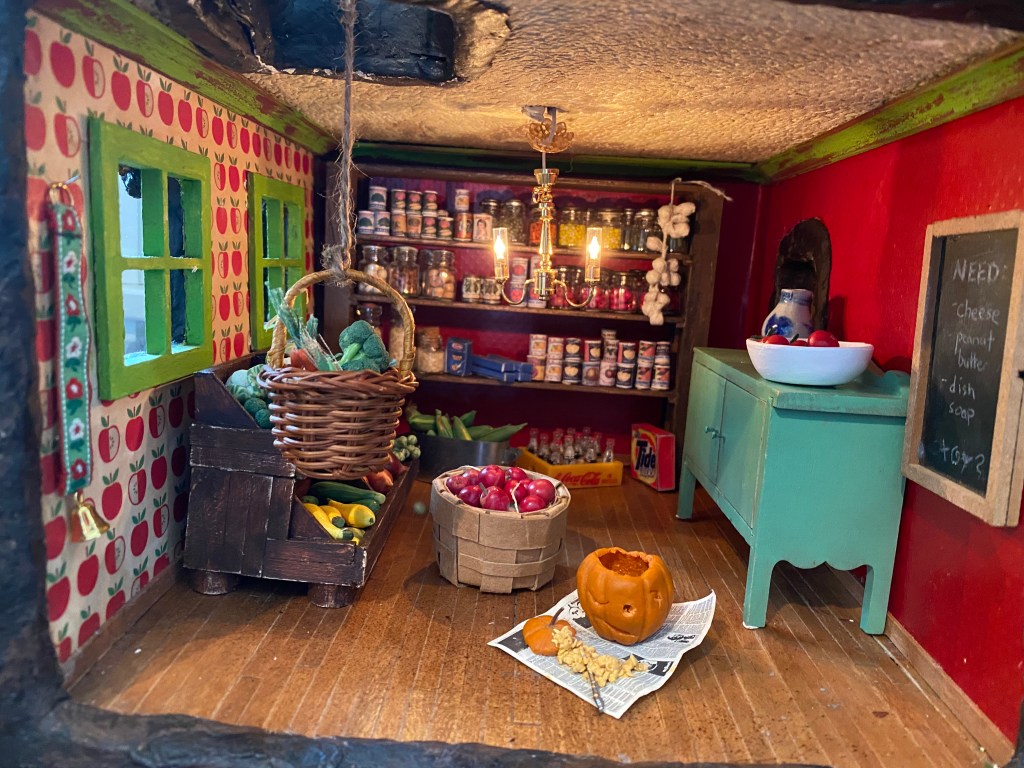

THE LAUNDRY ROOM


THE BATHROOM


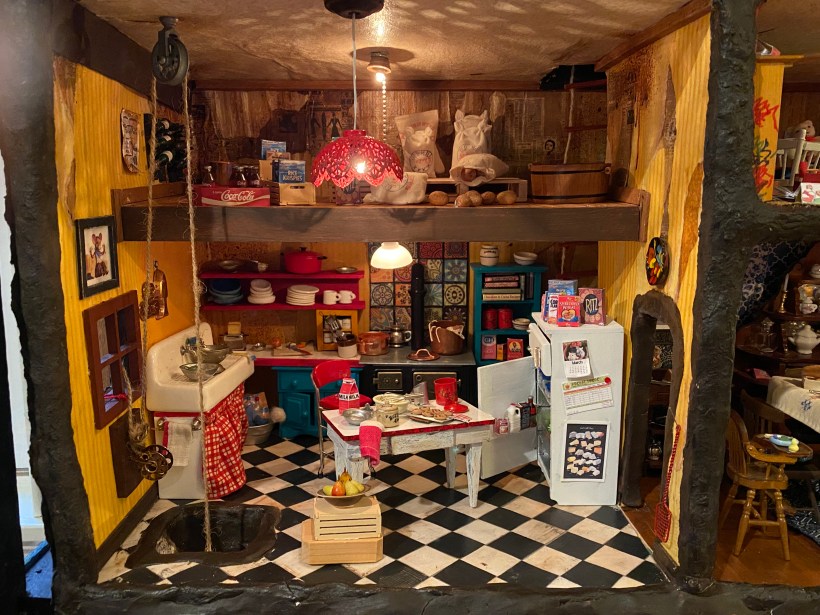
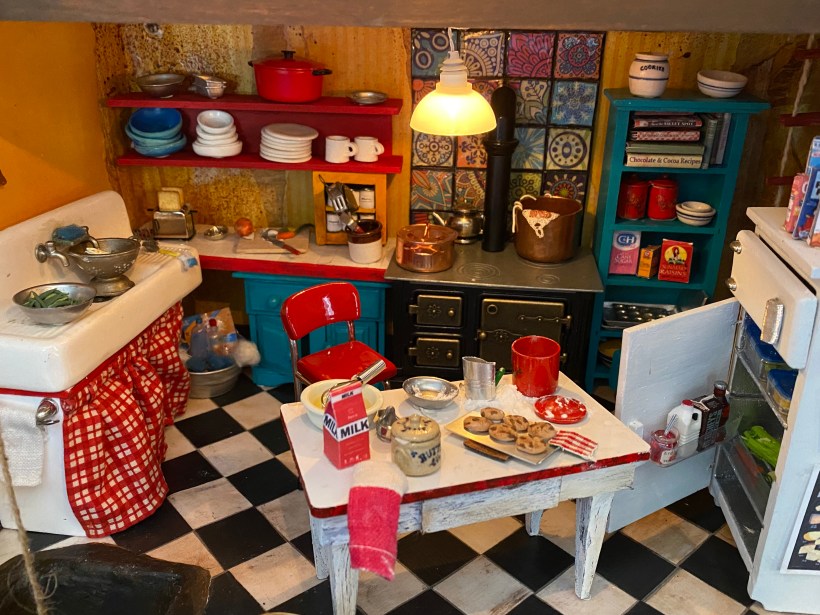
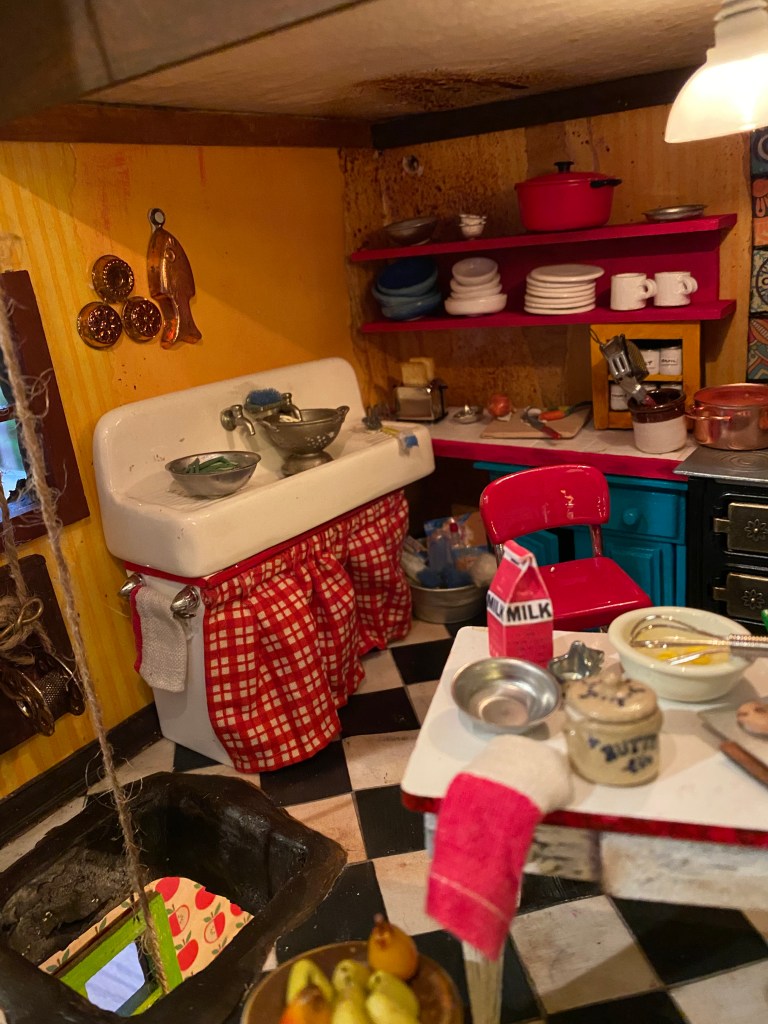
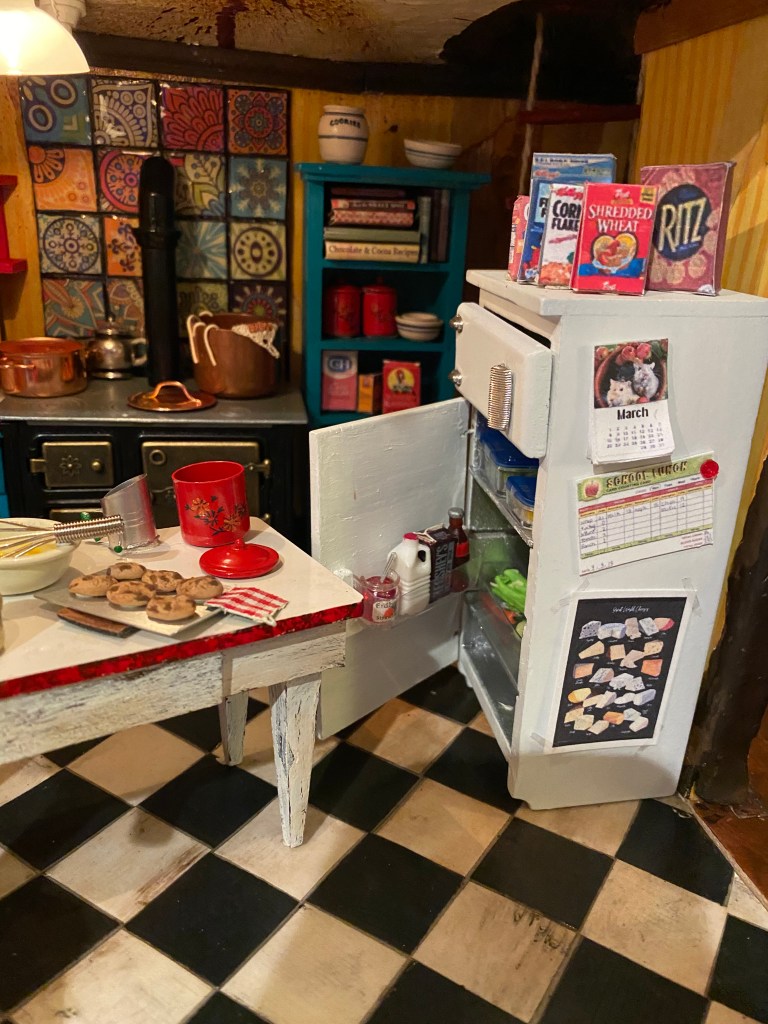
THE KITCHEN
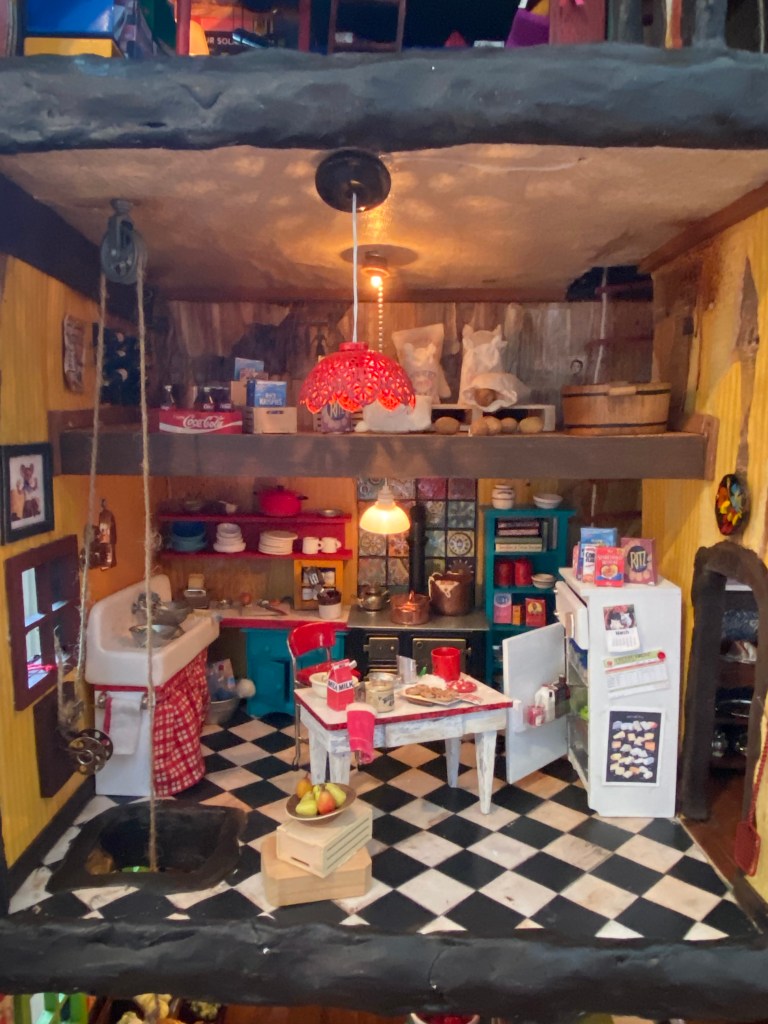

THE KITCHEN LOFT


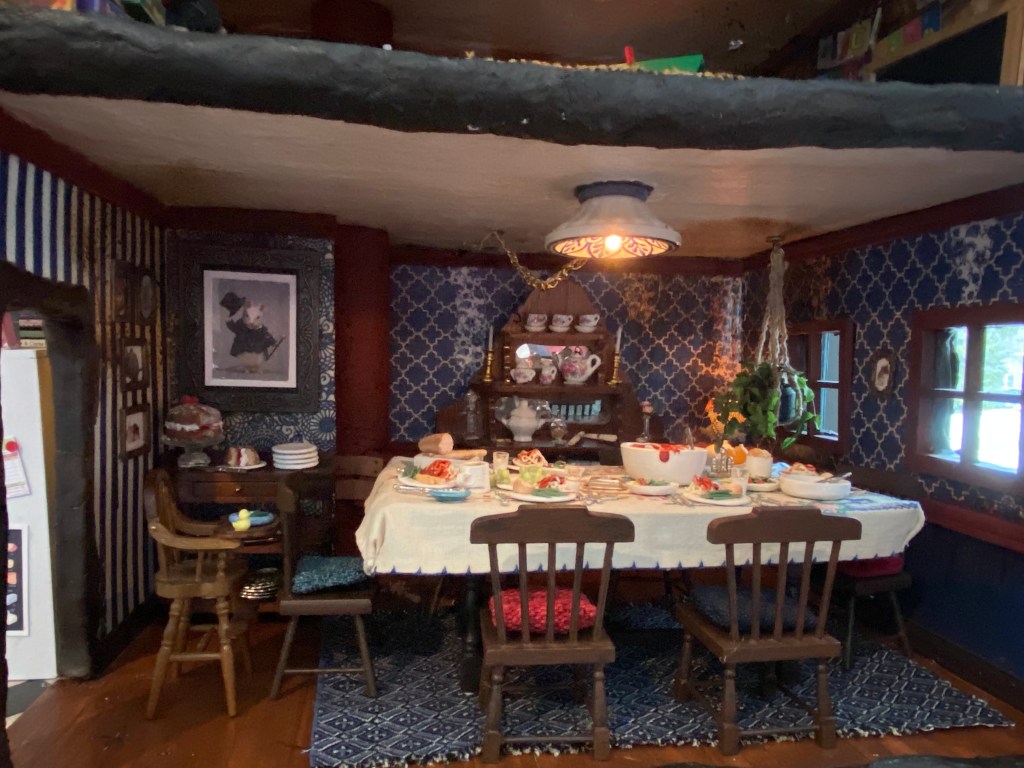
THE DINING ROOM

THE PLAYROOM
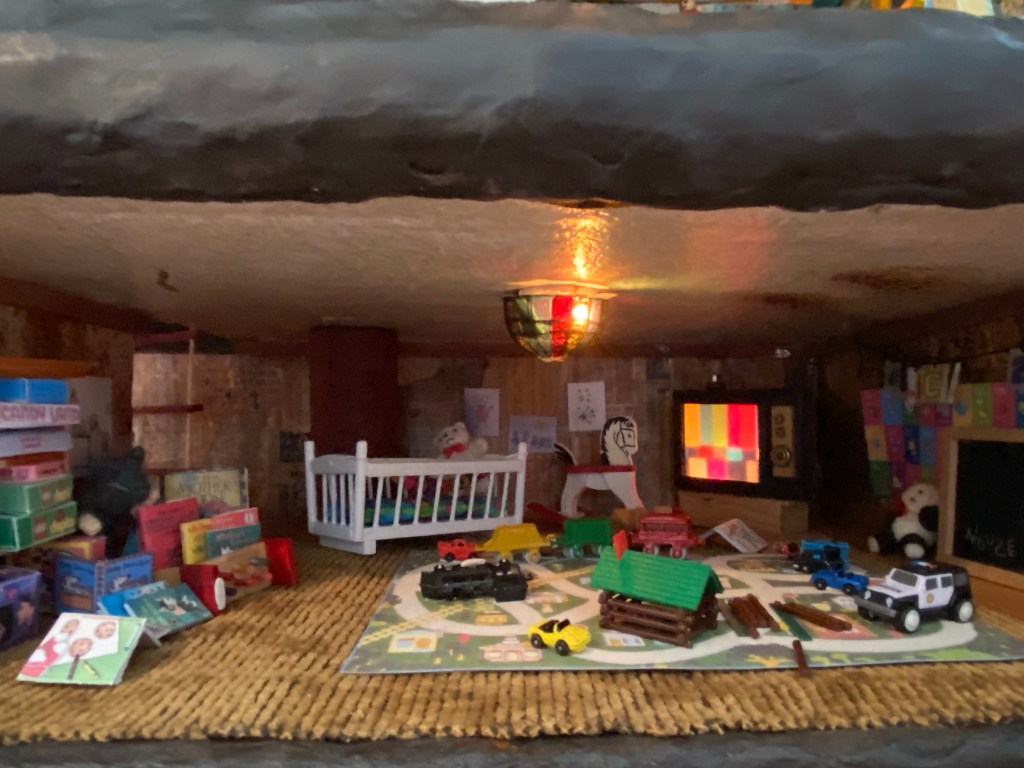

THE KIDS’ BEDROOM
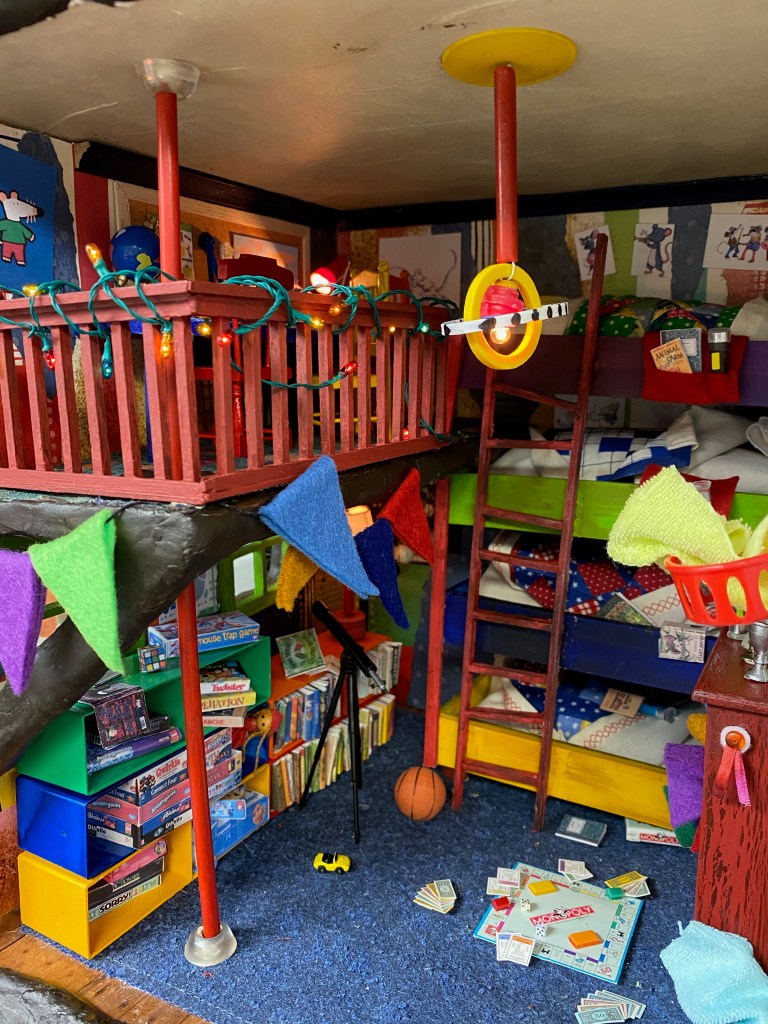

THE SWING IN THE HALLWAY (and my “Shrinky Dink” stained glass!)
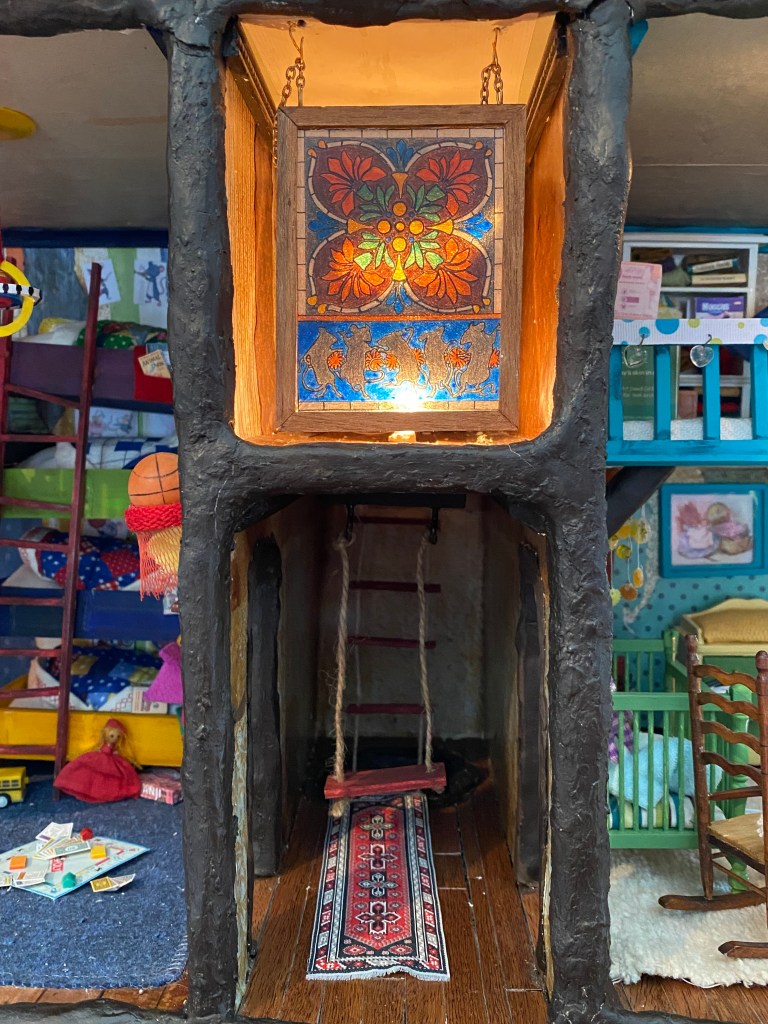
THE NURSERY AND MASTER BEDROOM
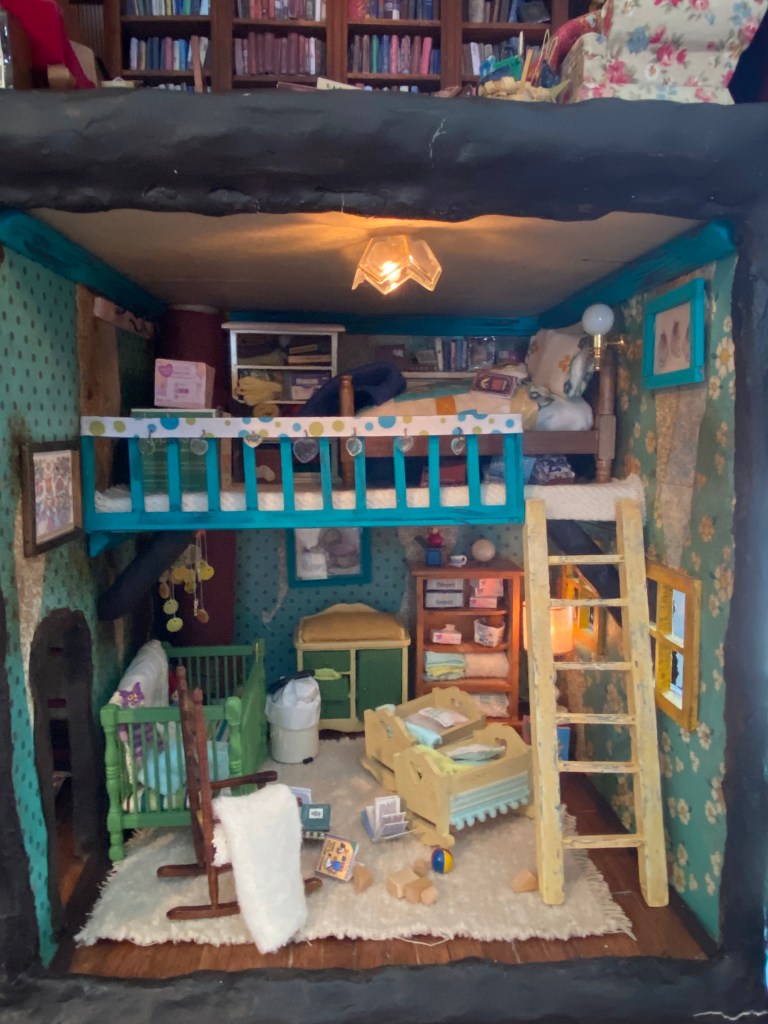

THE STUDY
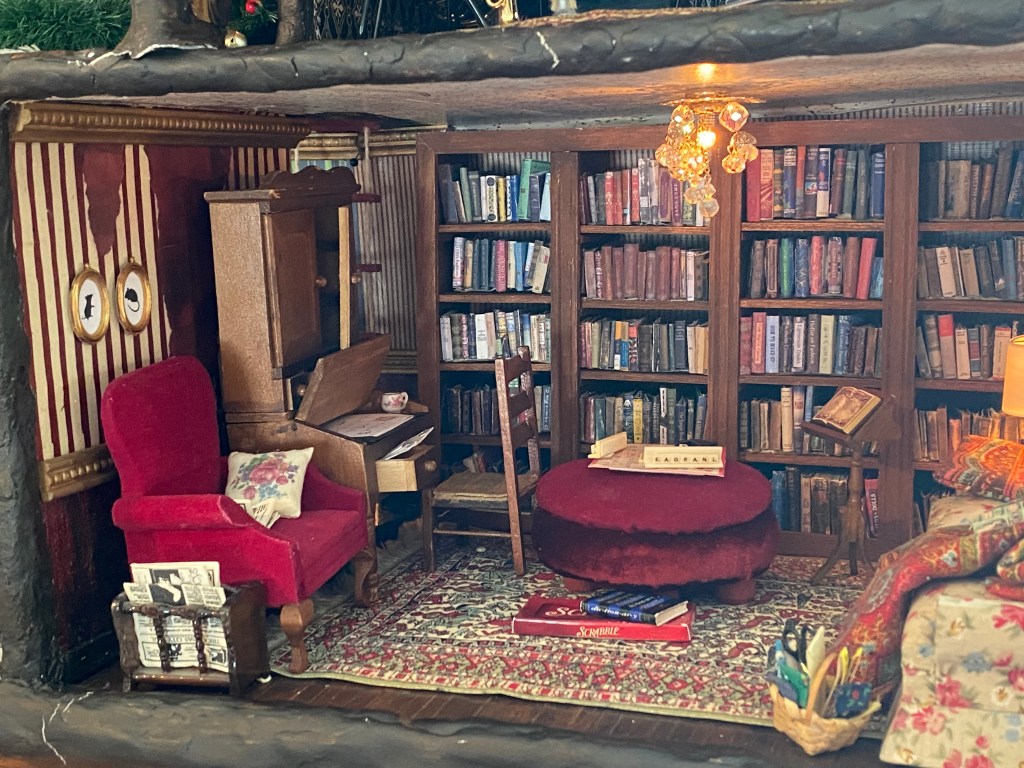
THE LIBRARY

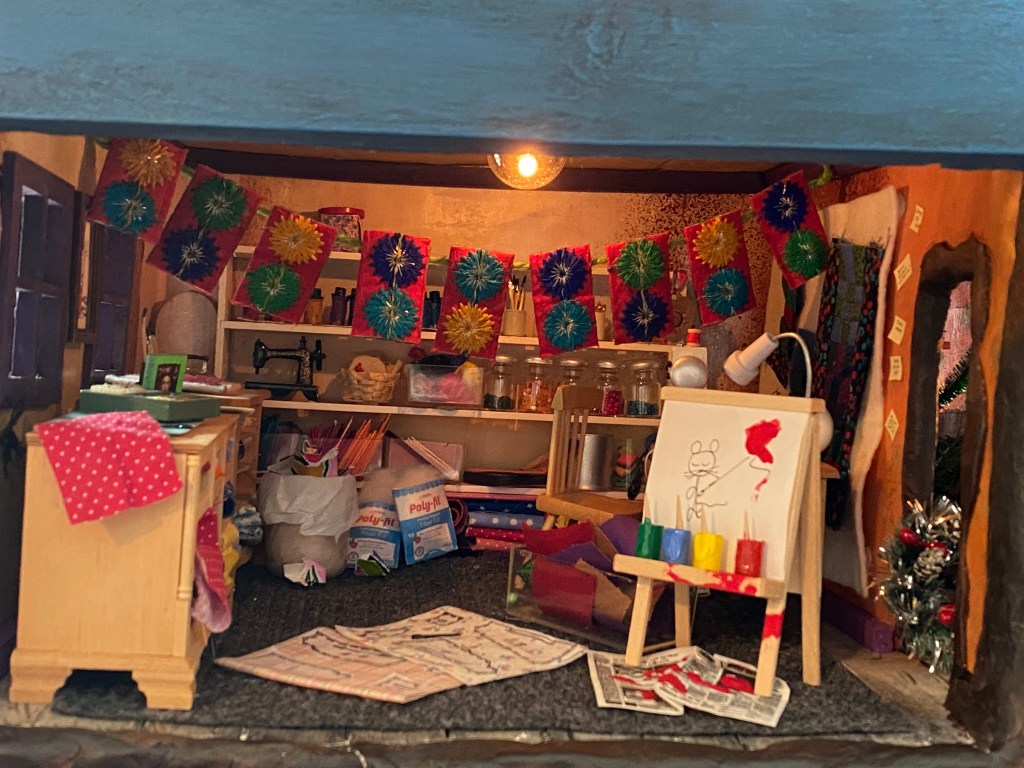
THE ART STUDIO

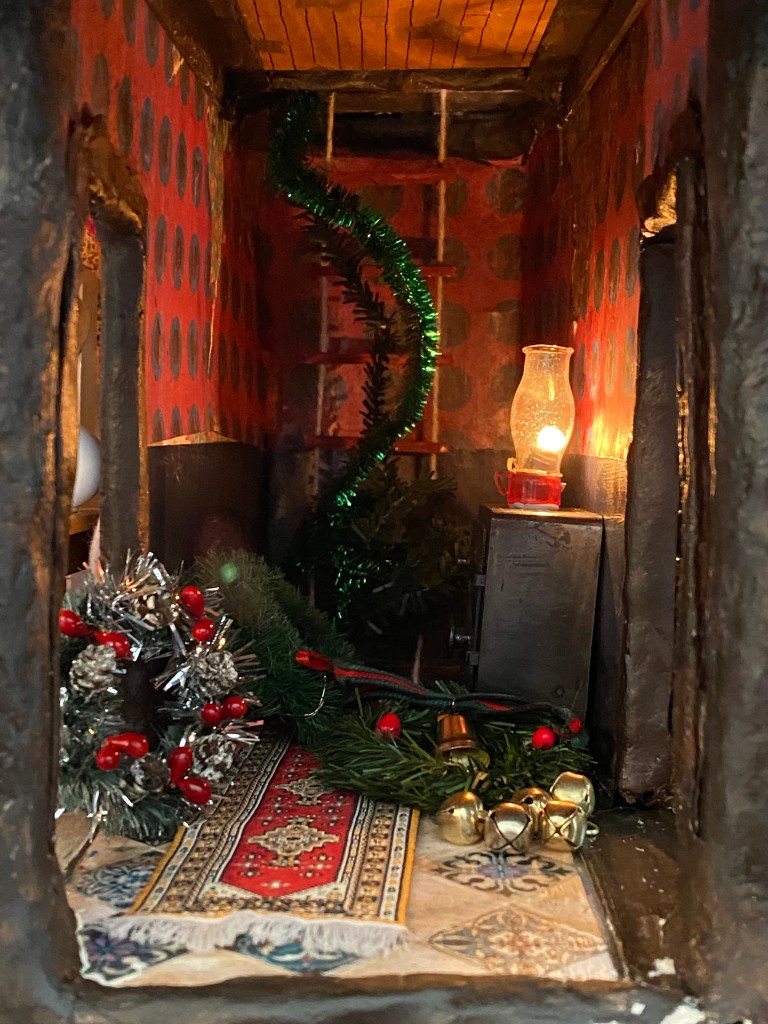
THE HALLWAY ENTRY TO THE ATTIC

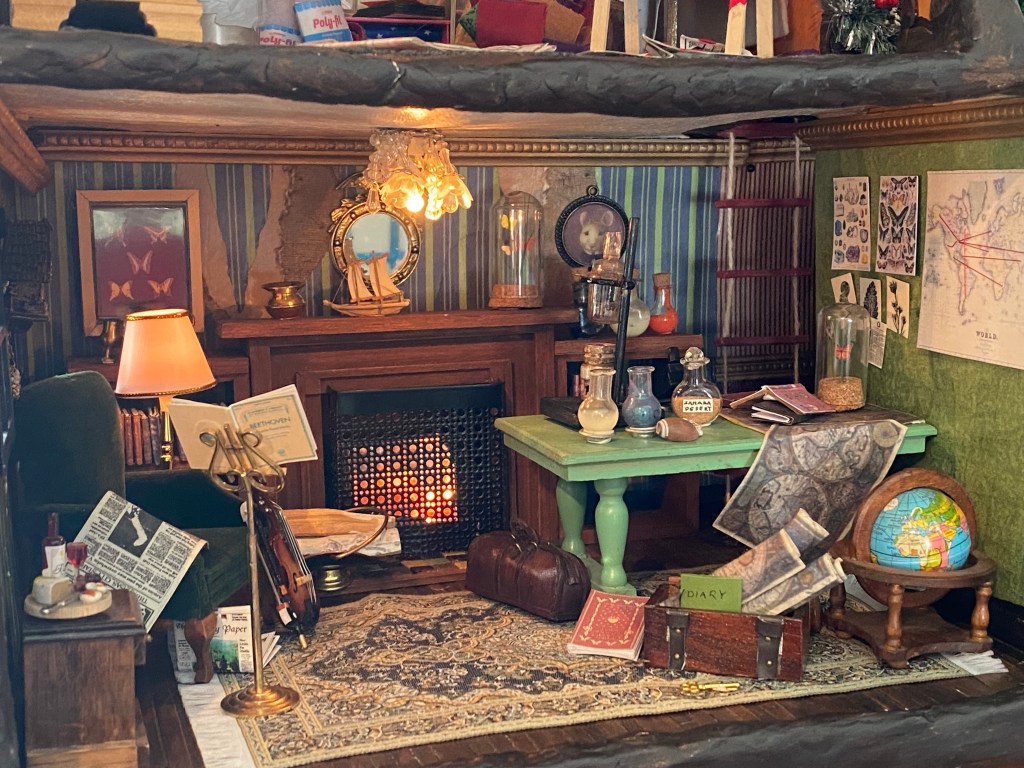
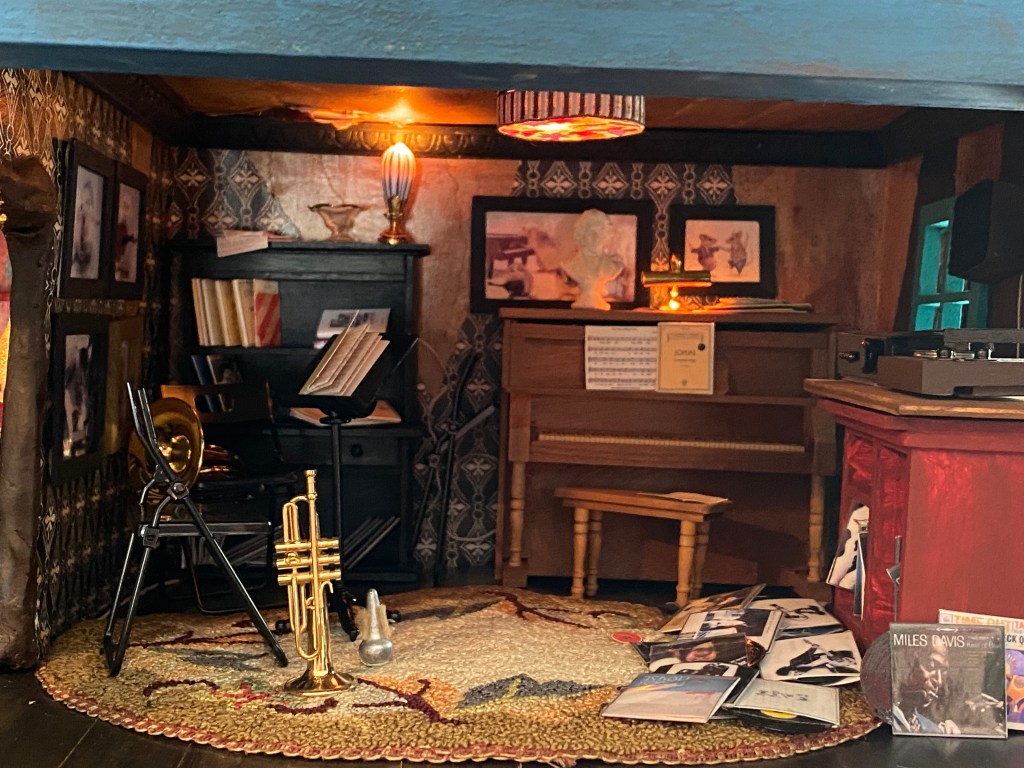
THE MUSIC ROOM

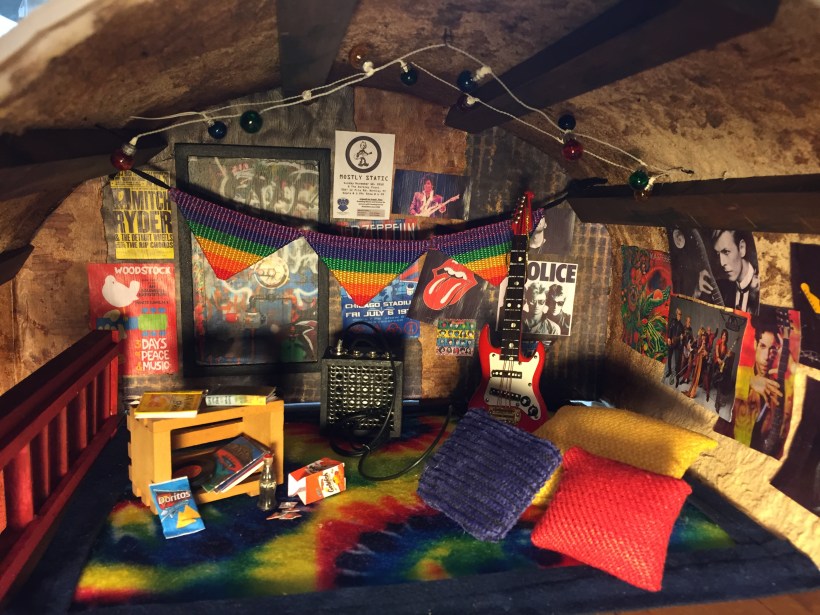
THE TEEN HANGOUT IN THE ATTIC
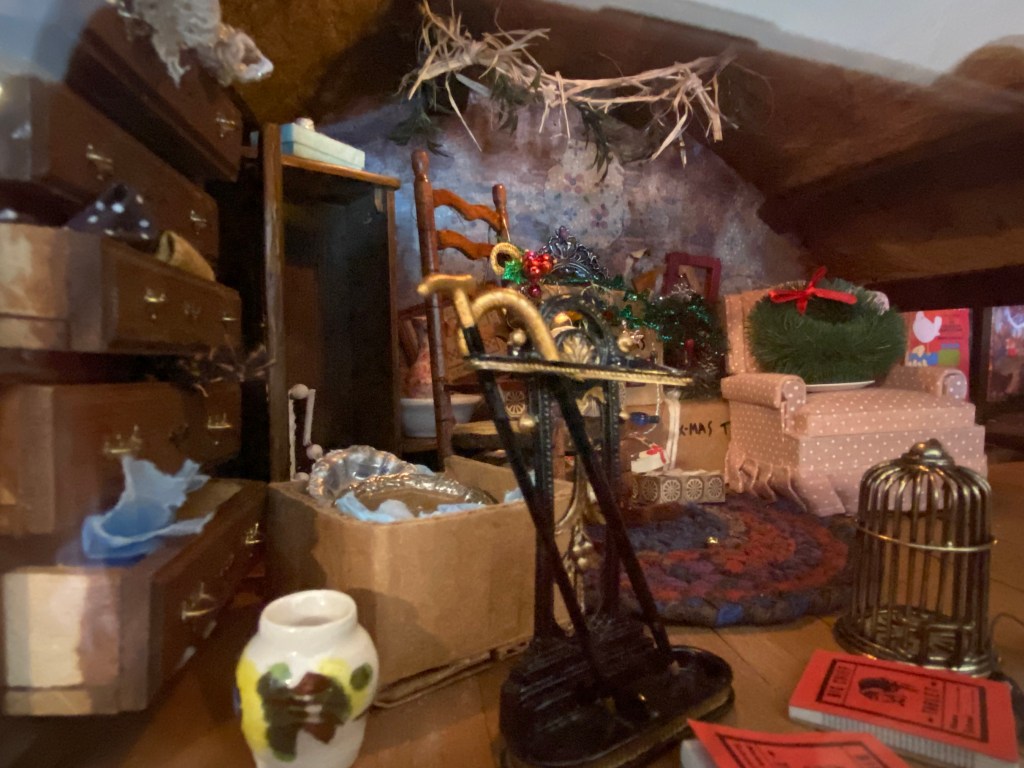
THE ATTIC STORAGE ROOM (It was impossible to get a good photo of this room through the glass!)
So there you have it. I’m sure I’ll add and subtract things over the years (and the pictures highlighted some cracks in the Paperclay trim I need to repair and paint), but all in all I’m pretty happy with how this turned out. On to one of my many “next” projects, including a MECHANIZED miniature house with lots of motors and movement–Santa did give me robotic supplies for Christmas……!

JOAN POTTER THOMAS
January 19, 2025

NOTE: I am trying to figure out how to add links to my blog posts by category so people (including me!) don’t have to scroll through the entire blog to find how I built a particular room. For now, I’m hopeful that these dates will help a little

All rights reserved, 2025. Photos or text may NOT be shared for commercial or educational purposes.
The Pantry and Kitchen

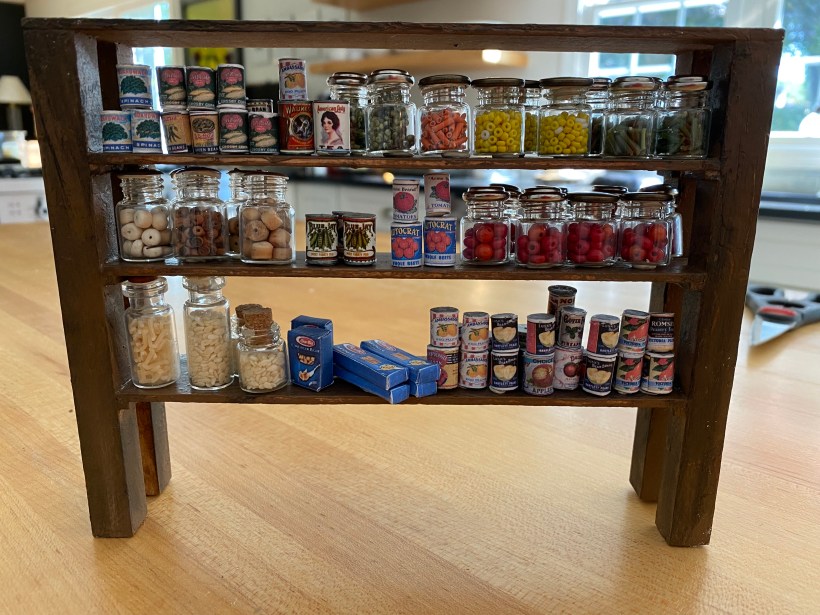
THE PANTRY
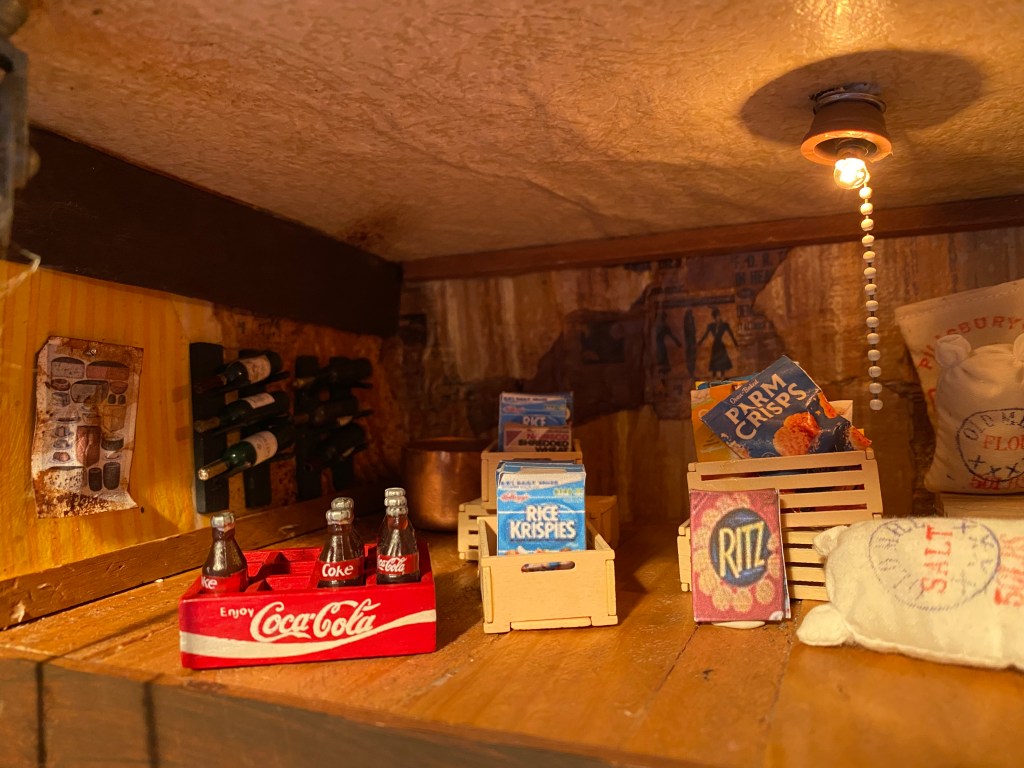
The food storage area in the Mouse House was a priority from the beginning of this project. I knew I wanted to highlight miniature fruits and vegetables and make “canned” and boxed items to showcase on shelves.

I built a simple shelving unit and made bottles of food using beads, pieces of dried clay, and various spices. I constructed boxes and cans from cardboard and covered them with packaging labels printed from the internet.
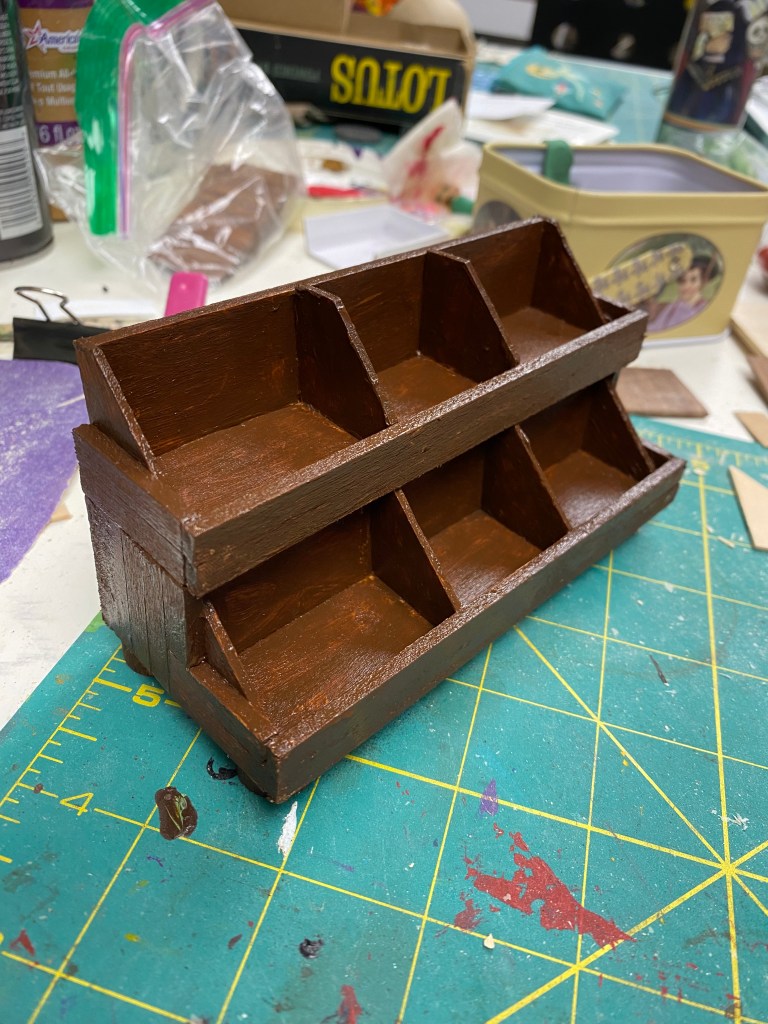
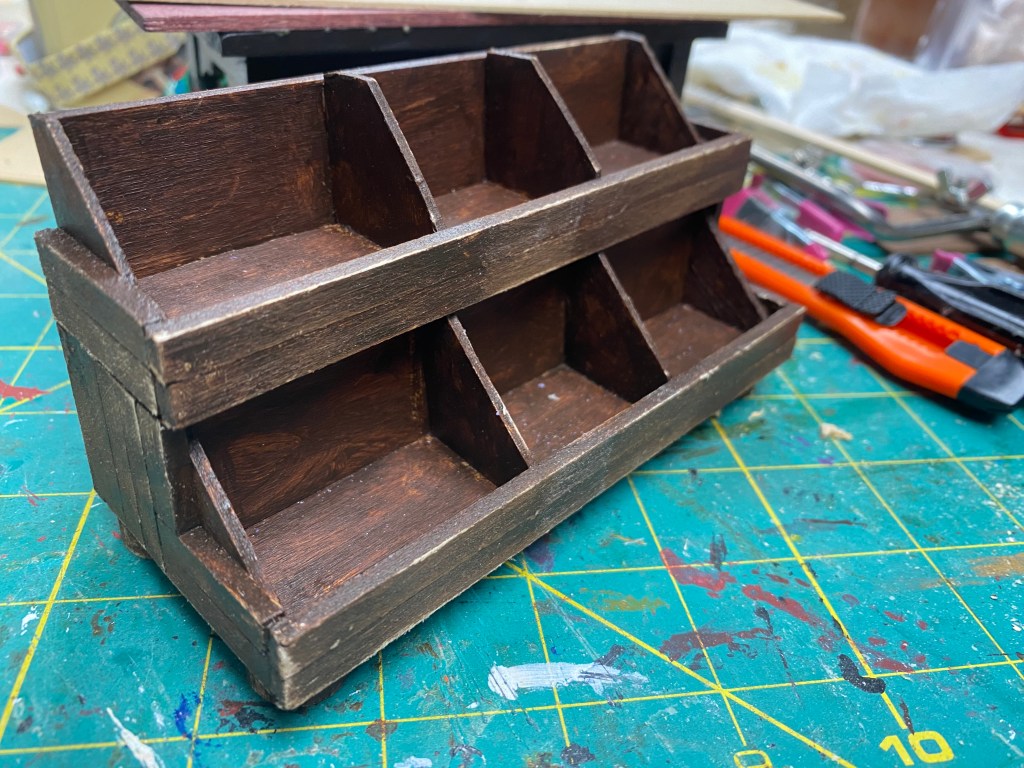
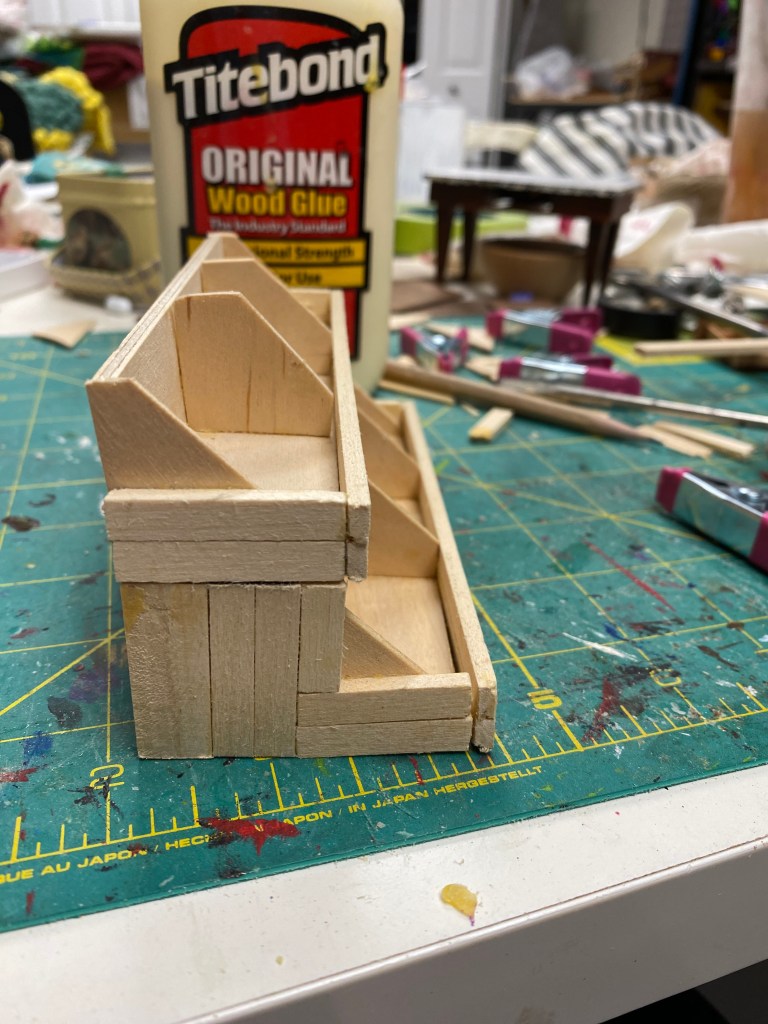
The wooden vegetable storage unit was built with basswood and then filled with many of the fruits and vegetables I sculpted out of polymer clay while in California.

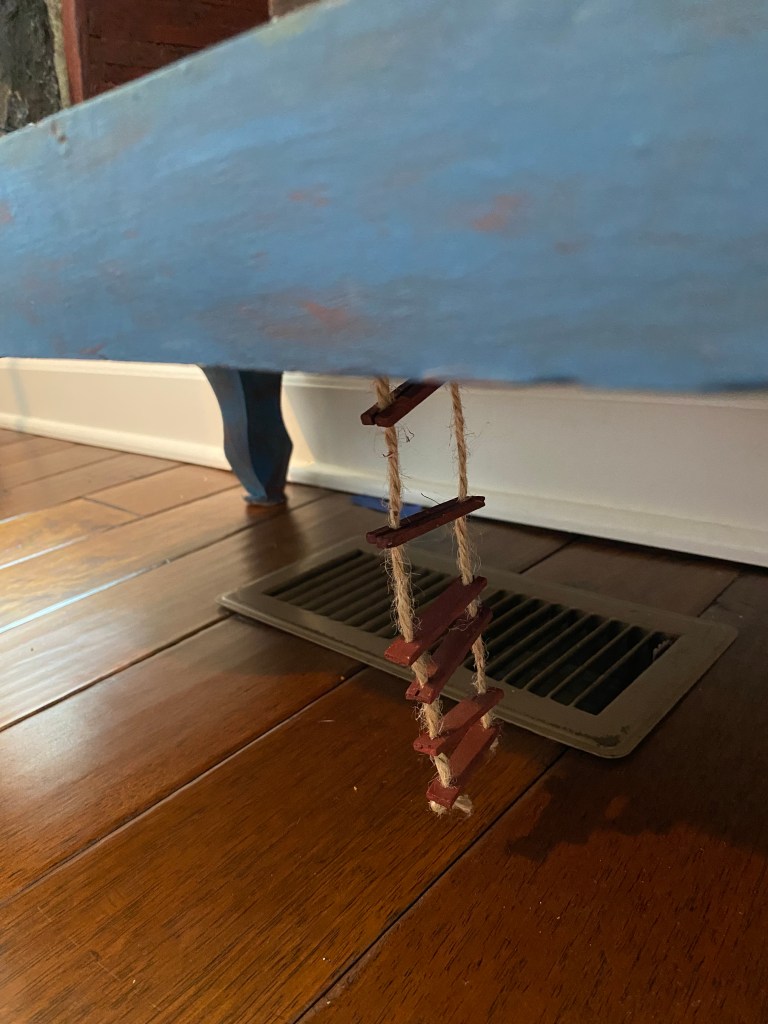
I placed the shelves in the back of the pantry, the vegetable bins under the window and a sideboard on the interior wall. The final piece of the pantry is the basket on a pulley system that can be raised through the pantry ceiling/kitchen floor so food can be brought directly to the cooking area.

THE KITCHEN
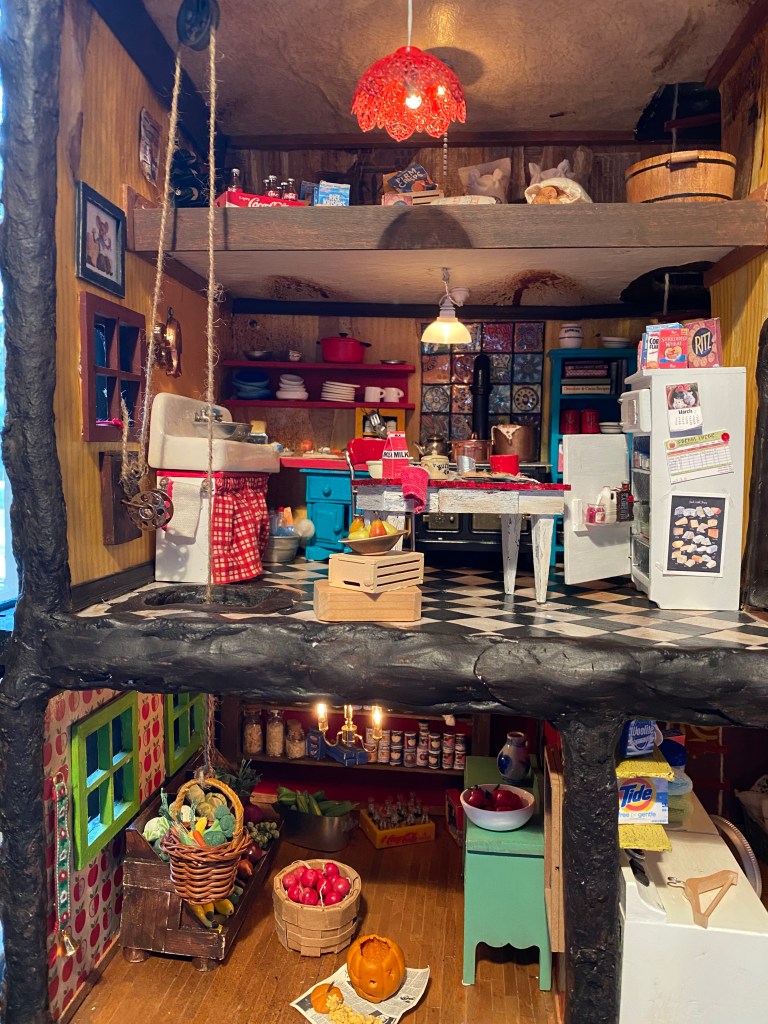
I worked the longest on the kitchen as I started designing and planning the layout from the very beginning of the seven year process. Details such as the tiled wall behind the stove (made with scrapbook paper covered in gloss), the kitchen sink set-up and the refrigerator I refurbished were made a long time ago.

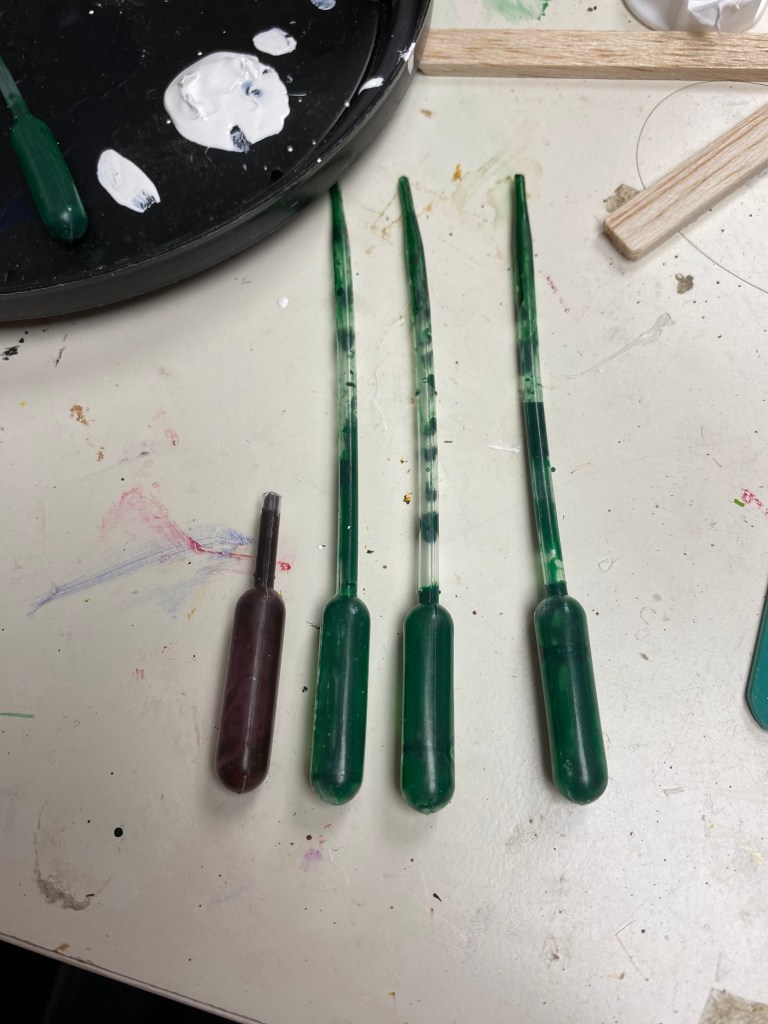
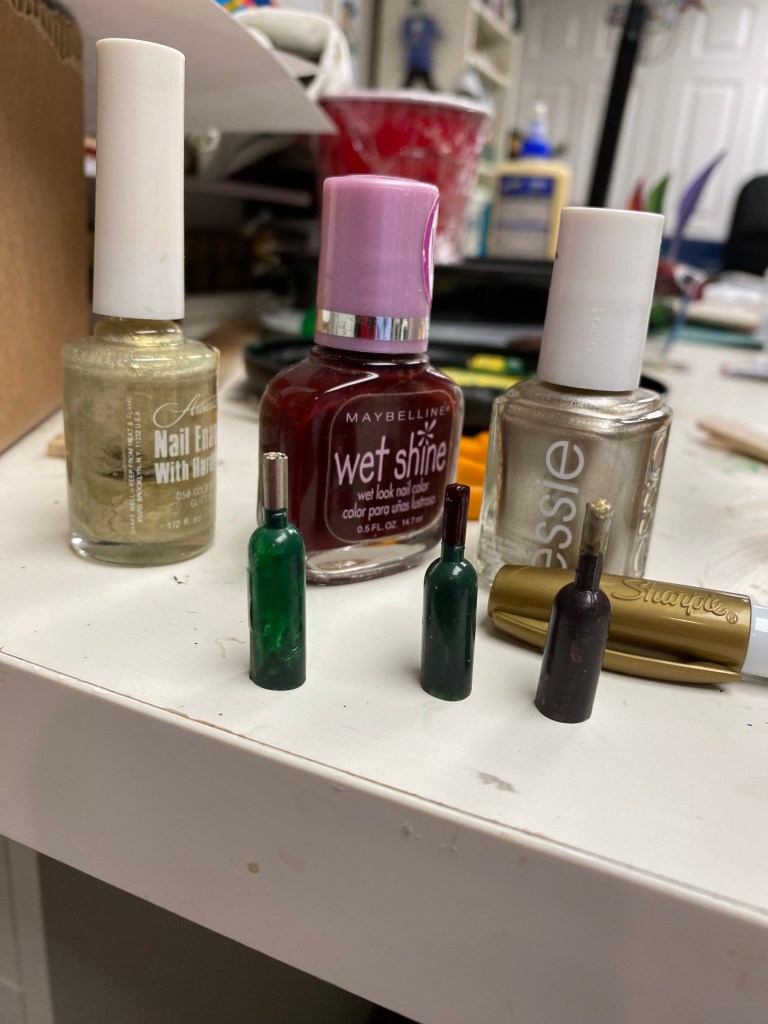
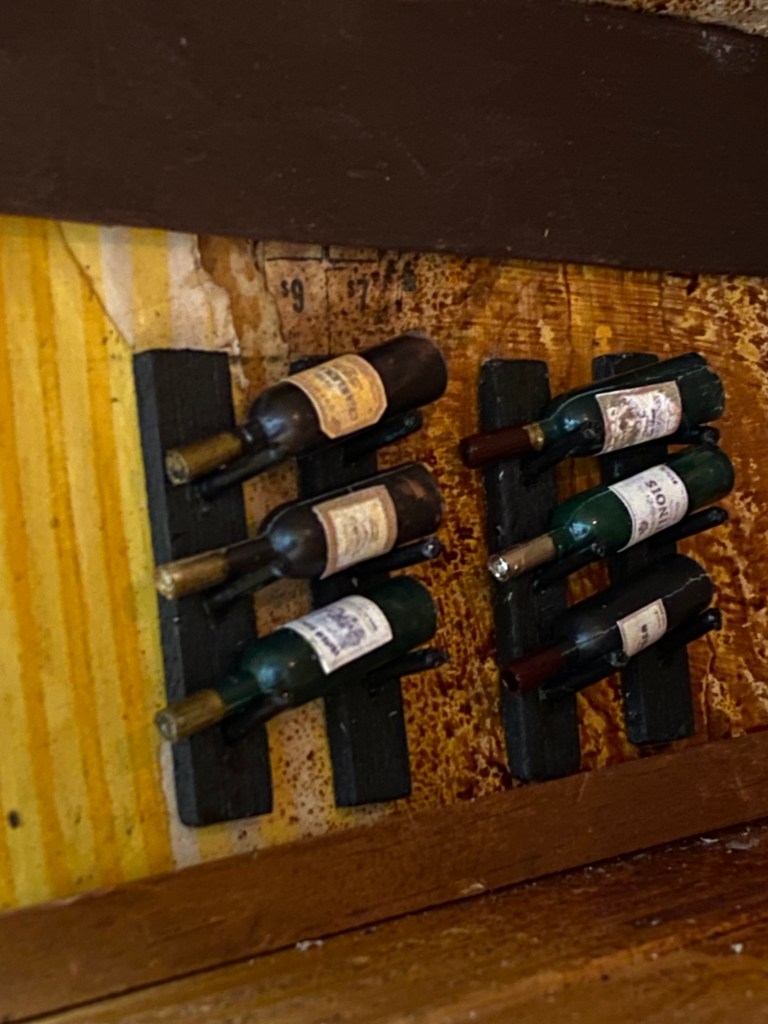
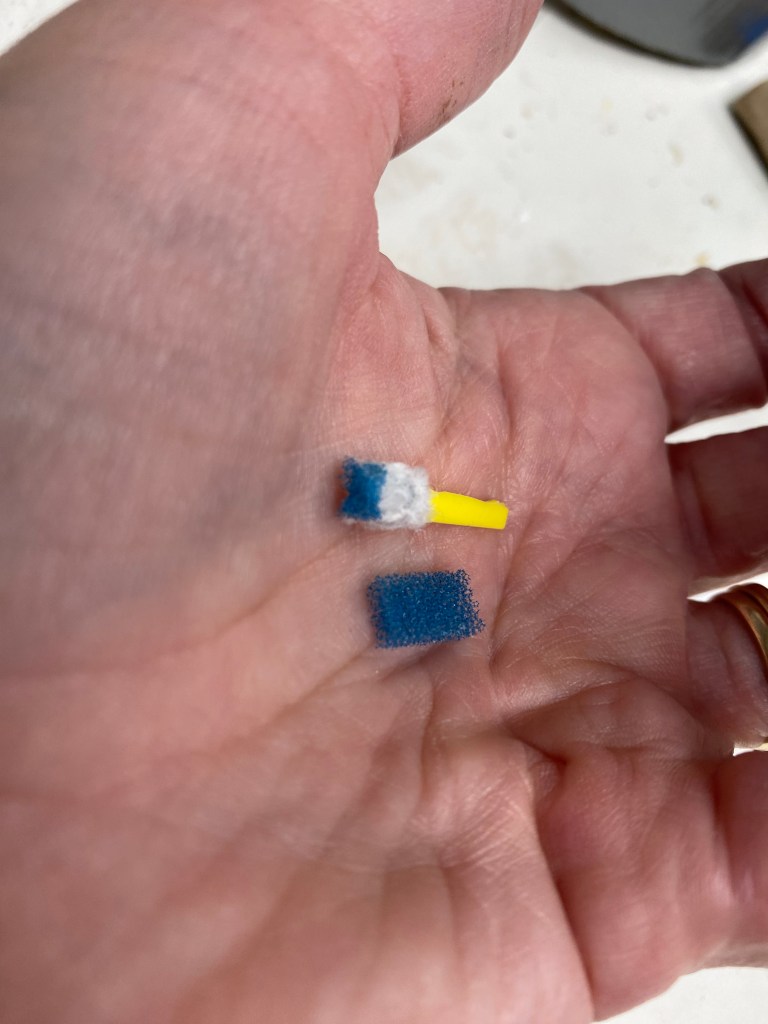
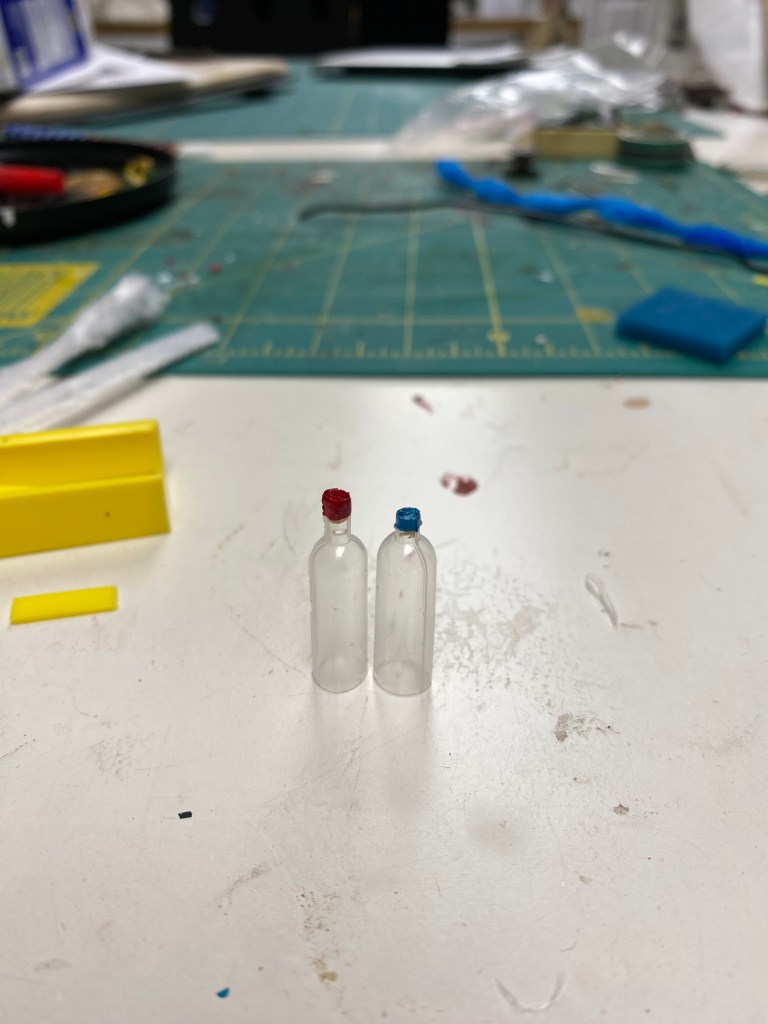
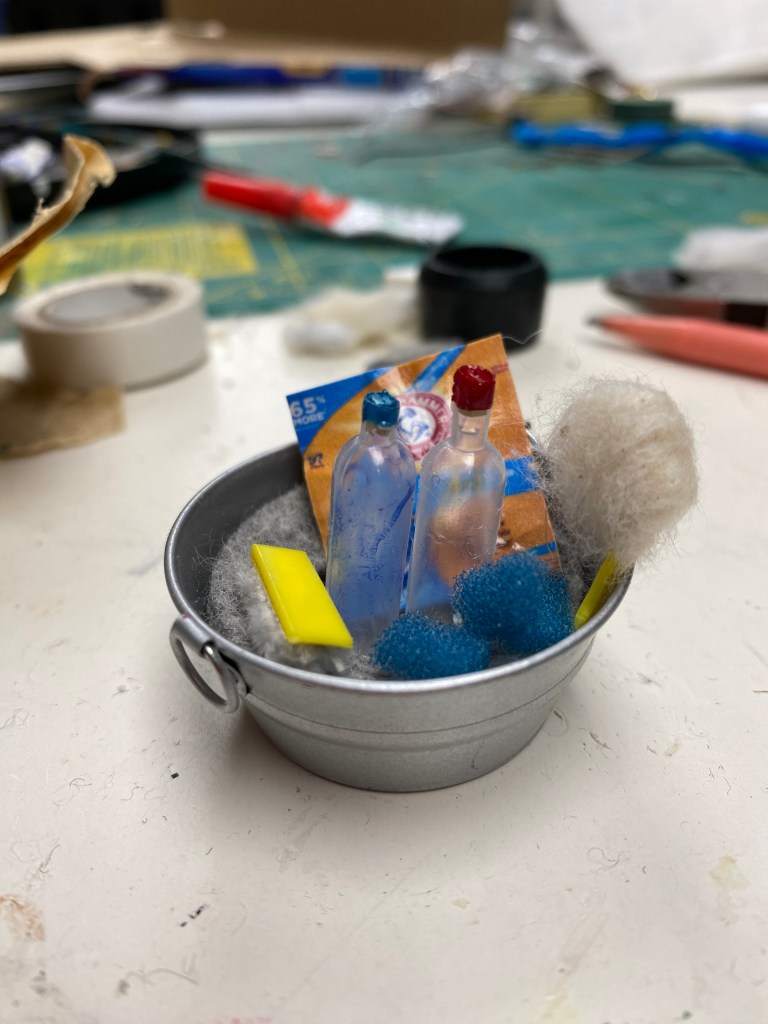
There are many components to this room, including: the loft storage, the pulley system, the shelves with the spice rack I made from beads and the dishes sculpted with clay; the food, such as the spaghetti in the strainer in the sink, the onion on the cutting board, the goods in the refrigerator and the cookies on the table; the hand towels and sink skirting; the wine rack and wine bottles (made with pipettes, paint and printed labels); the pictures on the wall and fridge; the cleaning supplies under the sink, etc.

Since I built everything over a long time period I don’t have many individual pictures of the construction processes so I’ll just have to remember via the photos!

Below is a picture of the two rooms together. The photo shows the pulley and the reel I made from a sewing bobbin.

Giving Thanks

I am so excited to announce that the last three rooms of the Mouse House are complete! I am saving the overall big “reveal” post for a couple of days, but wanted to share photos of the final stretch now.

THE DINING ROOM
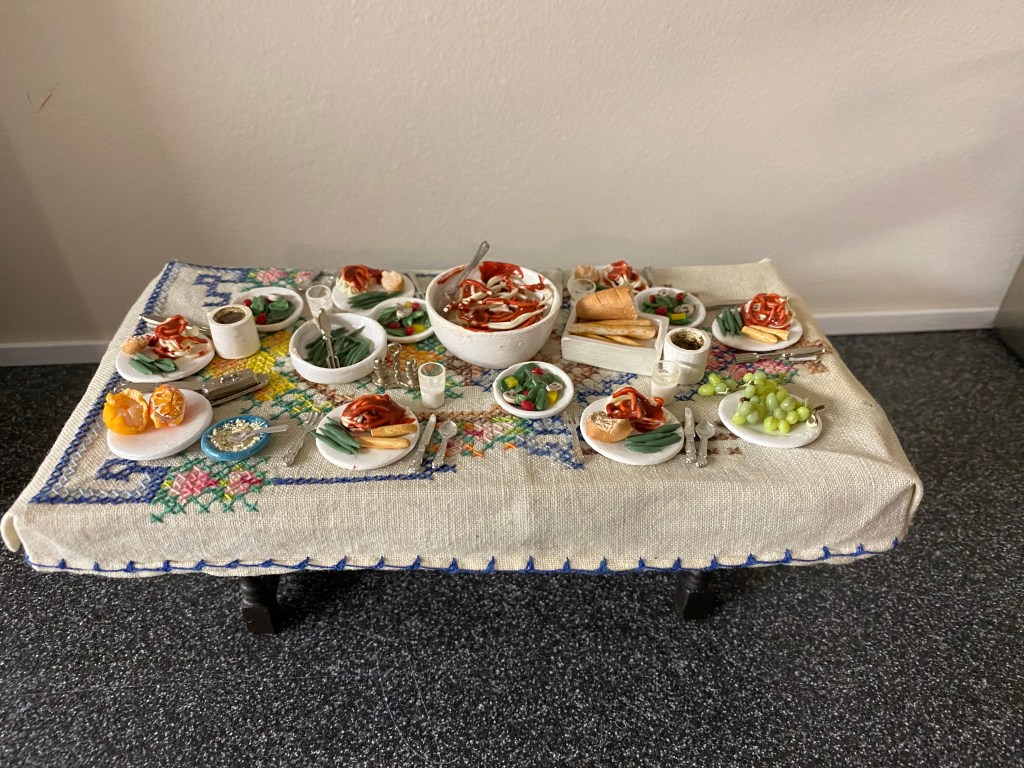
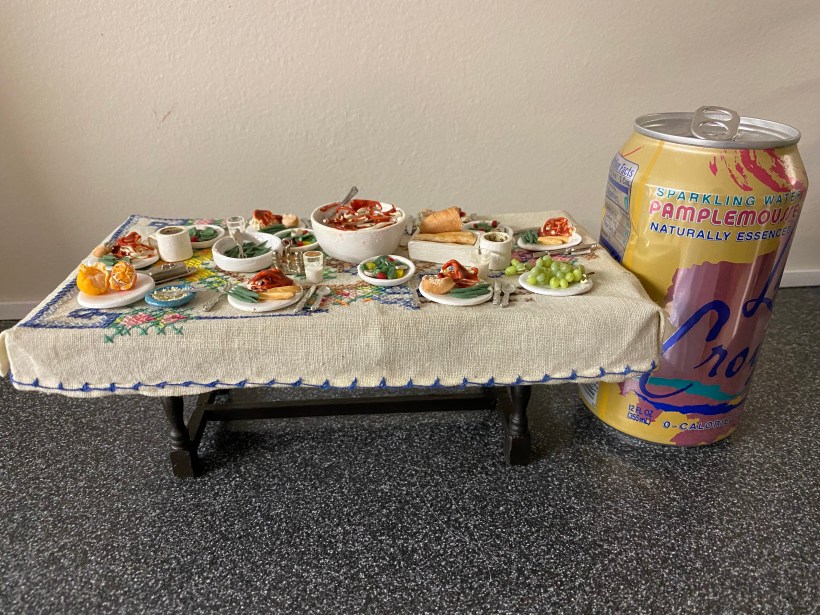
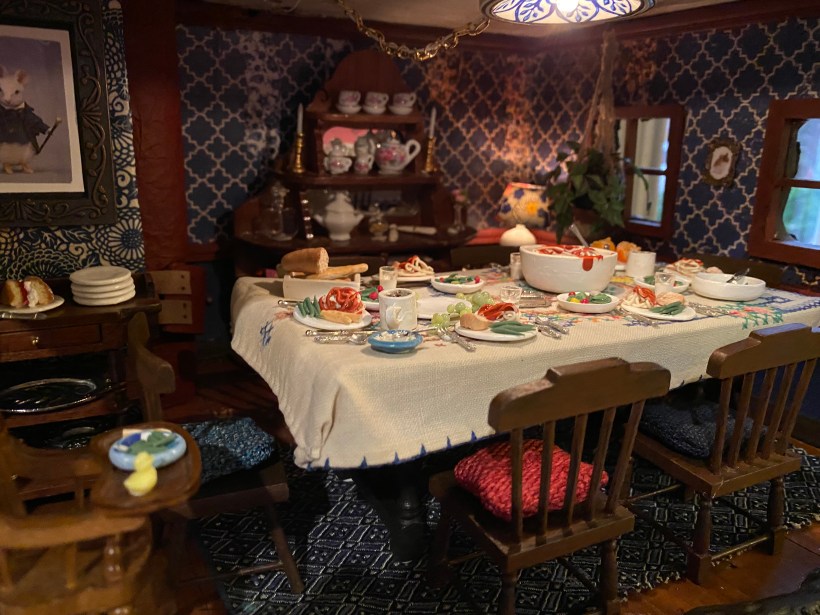
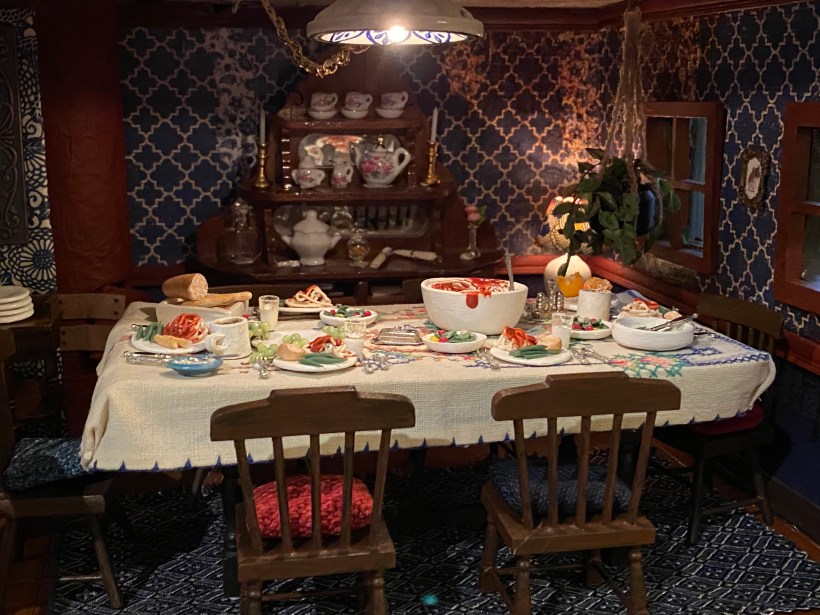
I built a table by taking a a broken one I found at a garage sale and adding a new top so I could have six place settings. The table was then covered with an old embroidered handkerchief I knew I had in my stash and once I tucked the corners in with a couple of sewing stitches, it made the perfect tablecloth. I set the table with the white dishes I made in California and then added a full meal from the pieces I had previously sculpted out of polymer clay. I plan to change these settings for various holidays but decided spaghetti was a year-round choice!

The back of the dining room holds a large buffet filled with various dishes and knick-knacks and a lamp I made with a handmade lampshade.

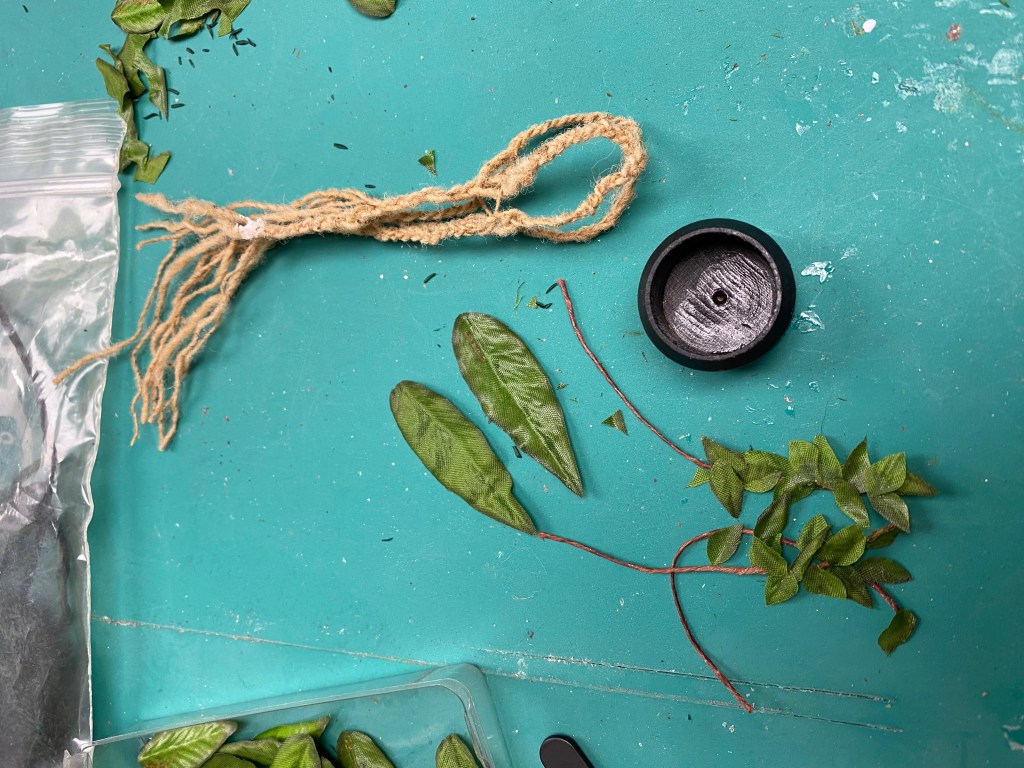
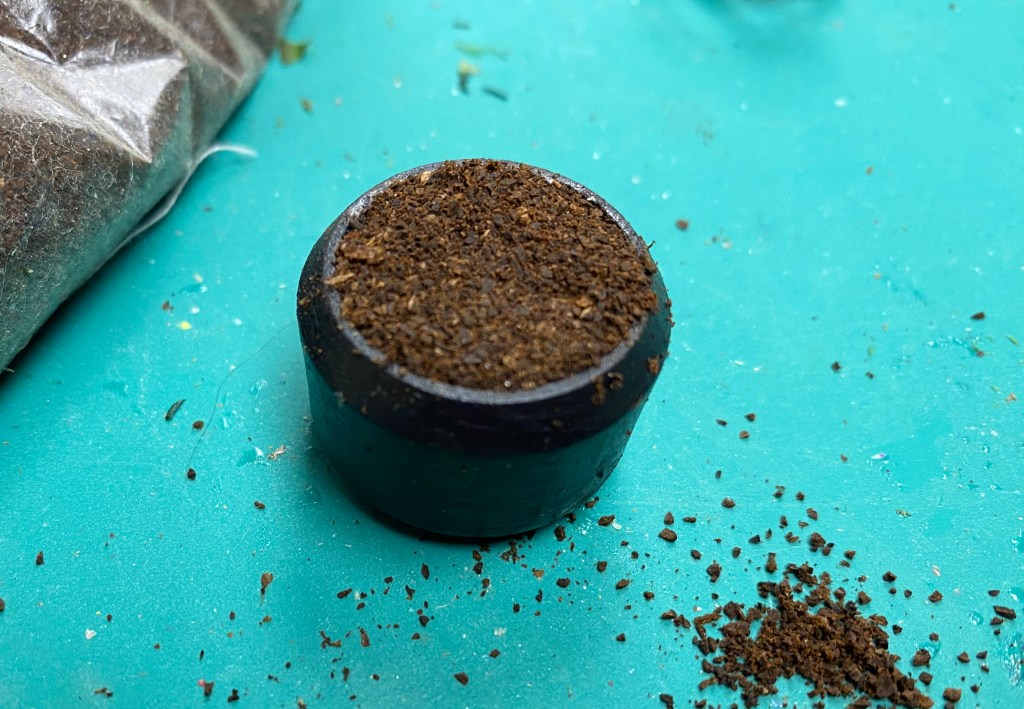
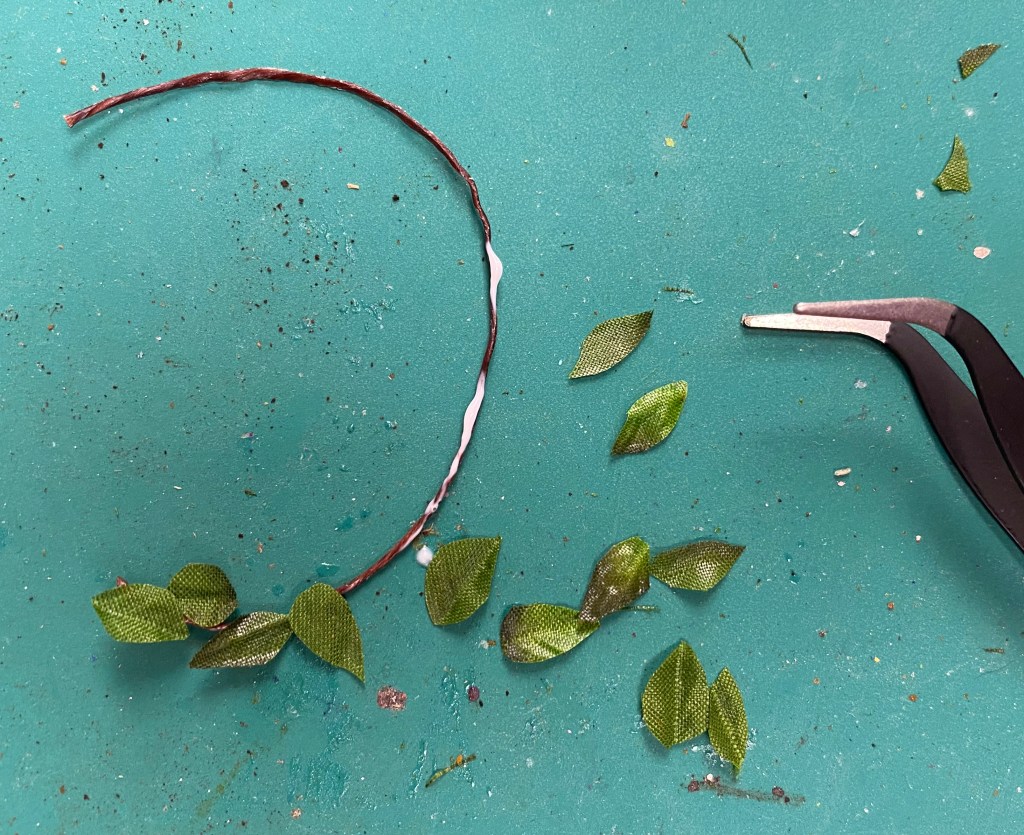
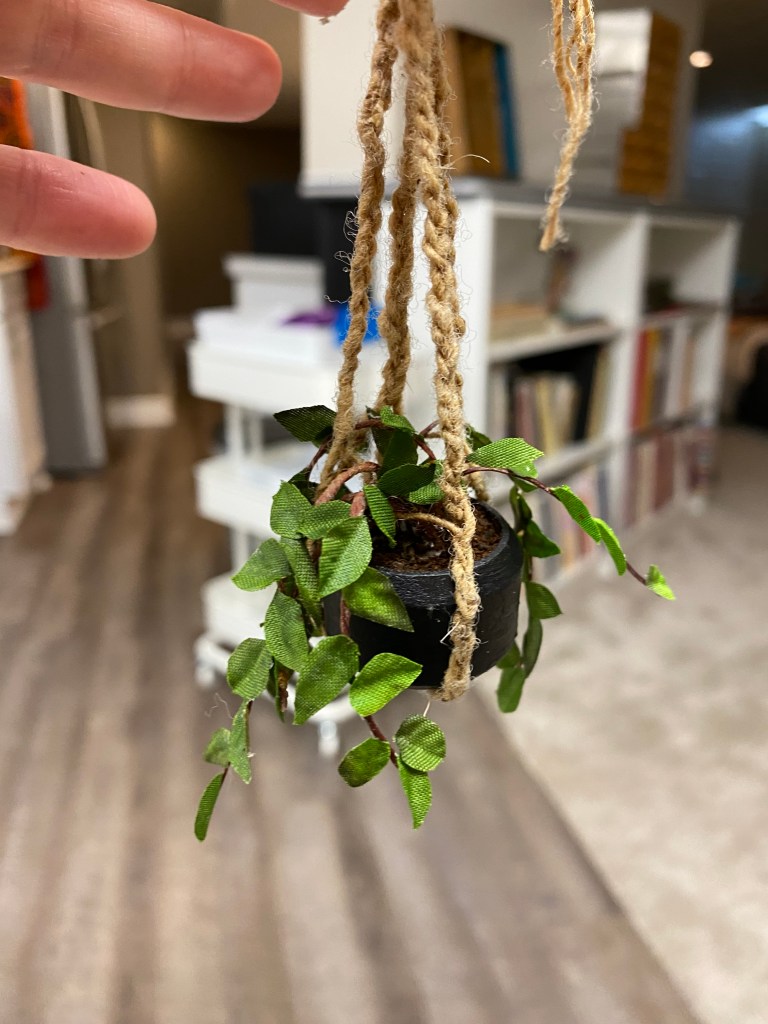
I also made a hanging plant for the window.

The corner of the dining room was the perfect place to put a table displaying the “Victoria Sponge” dessert I made with clay as well as the “family portraits” I printed and framed for the walls.

The hanging light was made out of a drawer handle and a piece of chain I wrapped around the electrical wire. I think it’s perfect above the table.

NEXT: The Pantry

Doing the Dishes

After finishing a few fiber art pieces with deadlines, I was able to get back to work on sculpting items for the Mouse House this last month. I’m trying to finish up the kitchen and dining room food pieces while in California so when I return to Michigan I can pull those last rooms together.

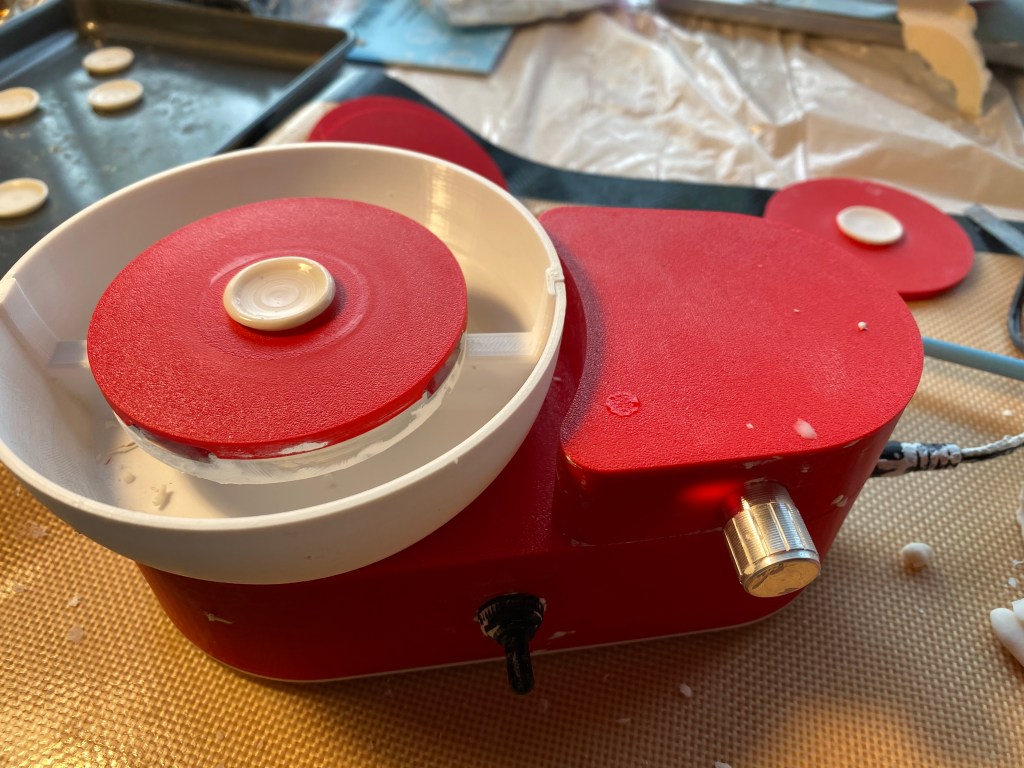
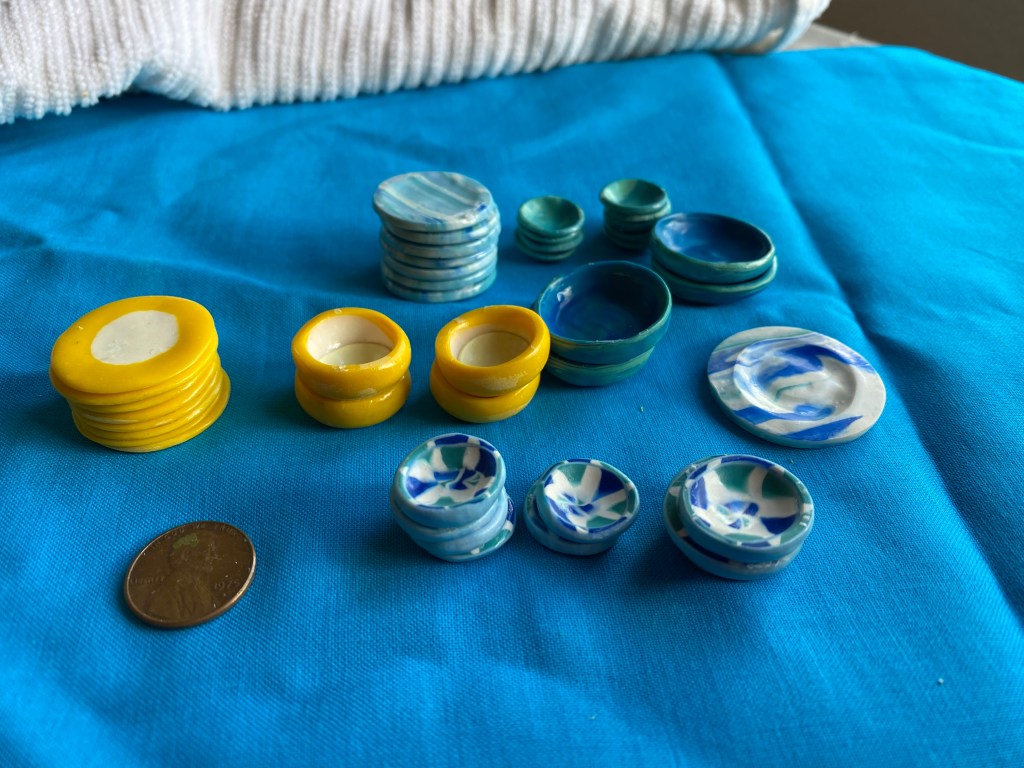
I need dishes for the food I made last year, so I’ve been experimenting with various methods of making plates and bowls. I practiced for many hours with various air-drying clay thrown on the mini pottery wheel Andy gave me for Christmas.

These turned out okay but I wasn’t happy with my ability to “center” the clay and thus spent a lot of time fixing the plates so they ended up round. I will continue to work on this; I find the wheel so cathartic and want to get good at it, but my impatience to move forward with the Mouse House has prompted me to move on to other methods right now.

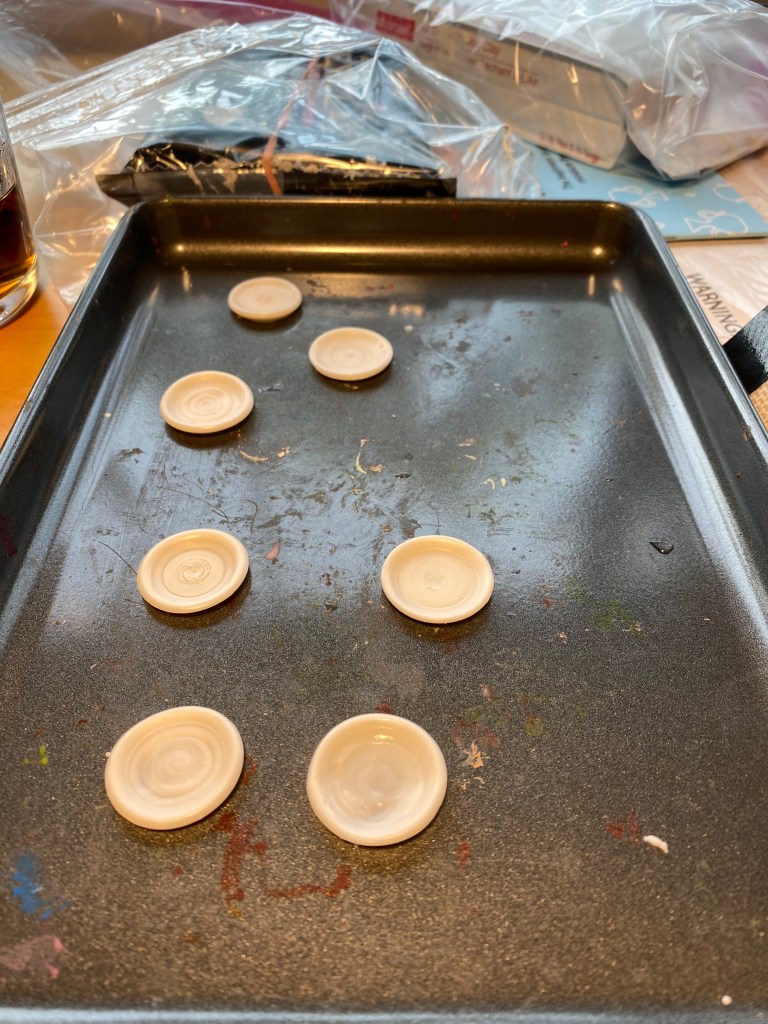
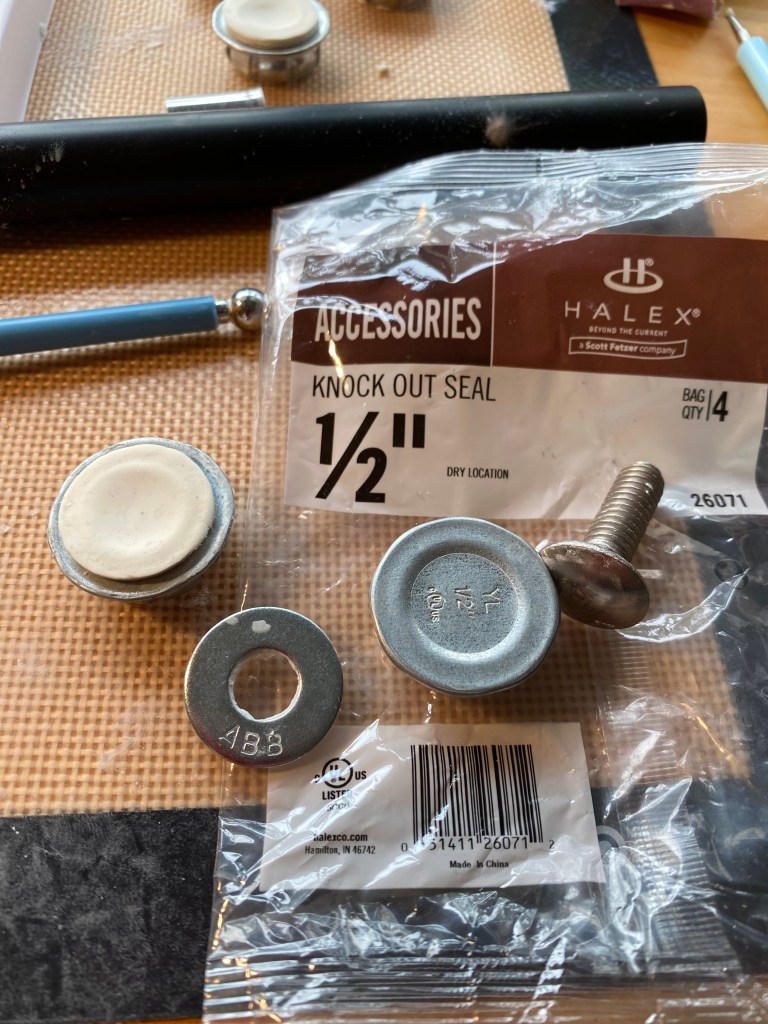
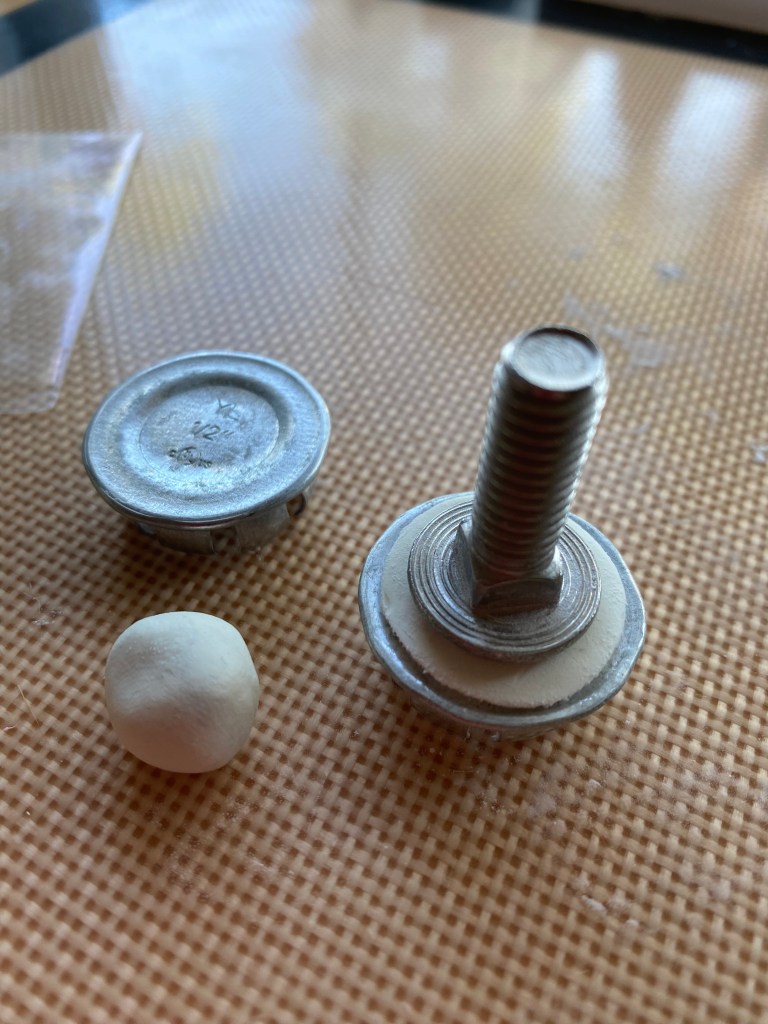
The next thing I tried was molding polymer clay on these small “knock out seals” I found at Home Depot. I cut out circles to fit the seals, then stamped an impression in the middle with a bolt. These turned out fairly well but there was a LOT of sanding once they were dry to thin the edges of each plate.

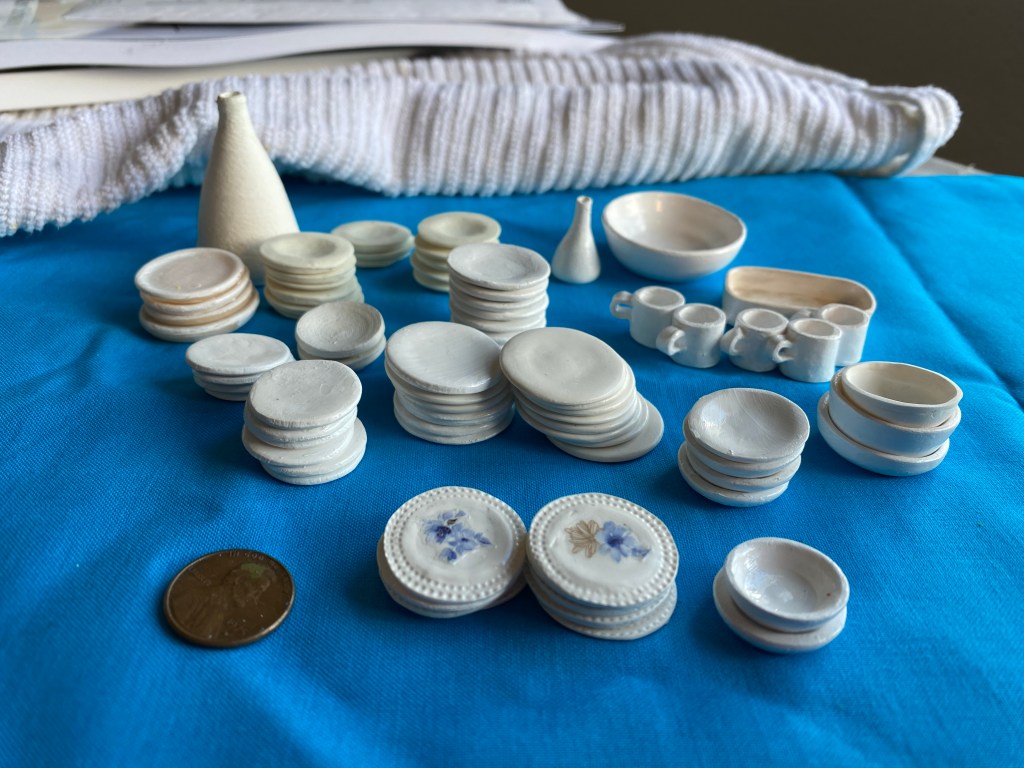
Finally I cut out circles using a thread spool and used a washer as the template to make the inner circle on each plate. I made bowls using various molds I have laying around, including these wooden bowls I found at Michael’s.

I’m still experimenting and learning, but I’ve made quite a few useable dishes and am ready to load them up with food the next few days.

While I’m enjoying making colored and “pretty” plates with various colors of clay and with nail decals (see the plates above with flowers), I think the food will look better on the plain white plates. We’ll see what I end up using once I get back home.

Going Home

It is time for me to head back to our house in Michigan for the summer. It will be tough to leave Andy and the beautiful weather and outdoor activities in California, but I’m looking forward to seeing our boys, our dog Edison, and my friends. I’m also looking forward to digging in our garden; a true downside of our SoCal apartment living is the lack of any yard to call our own. I miss that.

I am packing all of my polymer clay supplies and tools as well as anything else I have here for use in the Mouse House to take back with me. I’m hoping I will complete the MH kitchen and pantry this summer, then I will be on the home stretch to finish the whole thing!

As I organize everything for the flight home, I’m excited to see the variety of food I’ve made to use. It will be fun to decide where it goes!

My Sculpting Supplies

A good friend and blog follower asked if I would post the materials I use when sculpting with polymer clay. I am by no means an expert, but these are the items and brands I’ve been using to make miniature food.

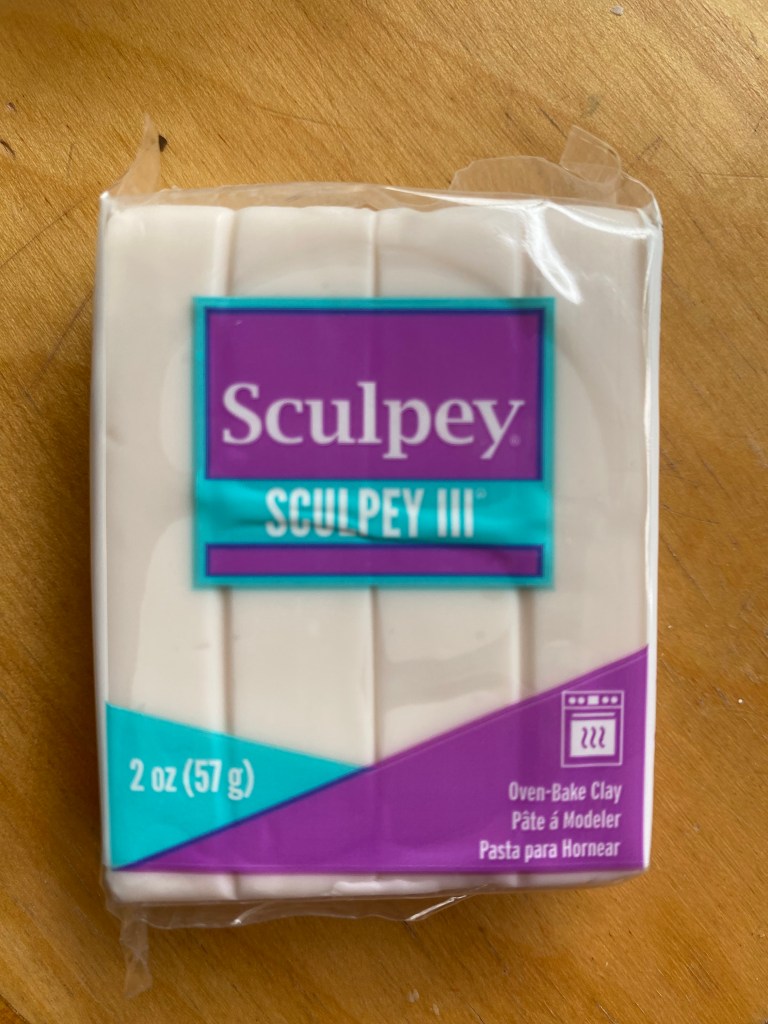
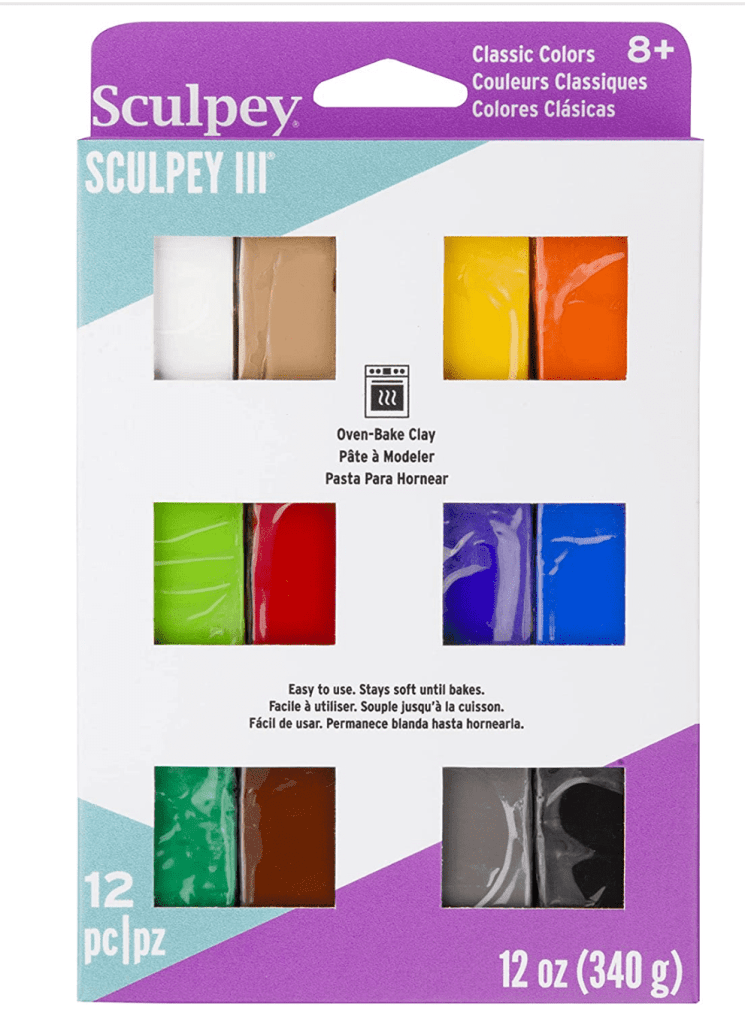
I use Sculpey III polymer clay. I like it as it’s pretty easy to work with out of the package without having to knead and condition it. With that said, sometimes I think it’s too soft and I have to let pieces sit for awhile before I cut or texturize them as otherwise my tools squish them out of shape. I started with the sampler above and have just mixed the colors as I go. The sampler is around $16 on Amazon.

I also use a lot of translucent clay. I buy whatever Sculpey version is available.

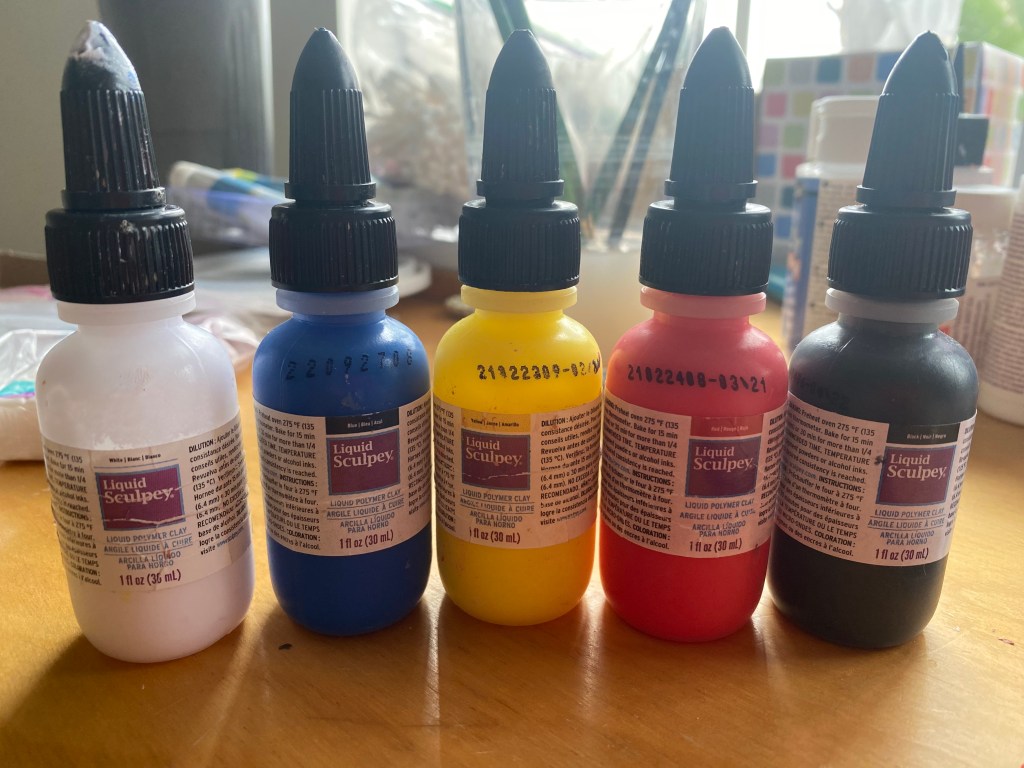
I use Liquid Sculpey when I need to make something less solid, for example catsup and mustard or icing on a cake.

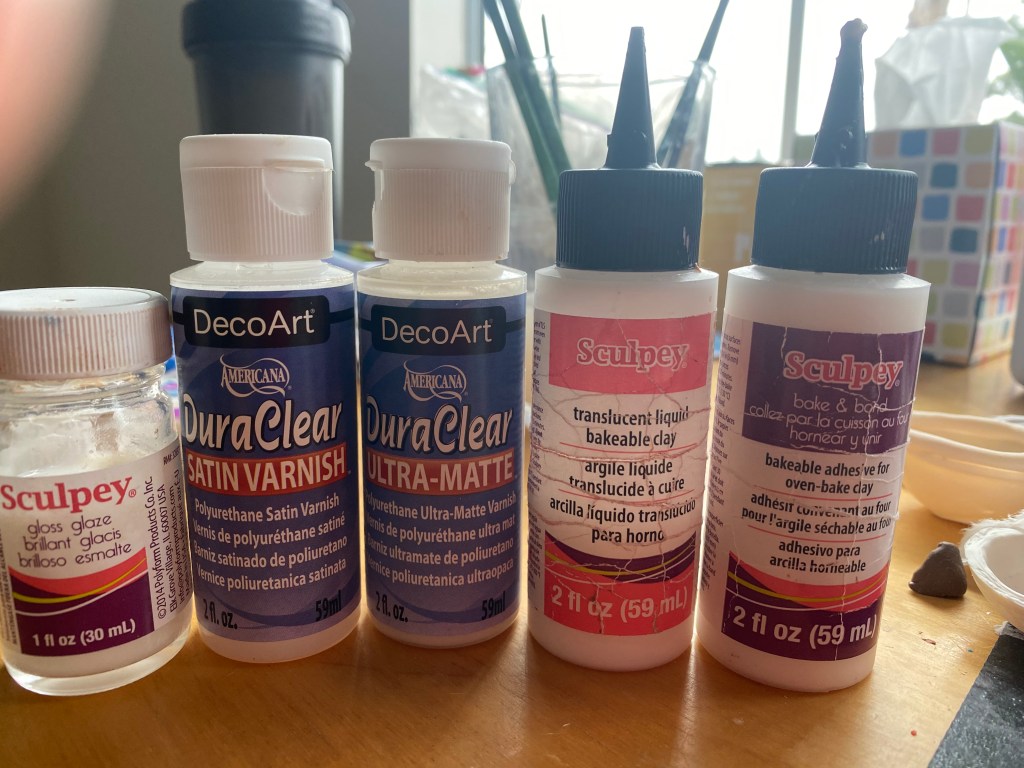
These glazes and the bakeable adhesive are essential. They are used to seal the clay, add translucency to clay, and to glue baked pieces of clay together.

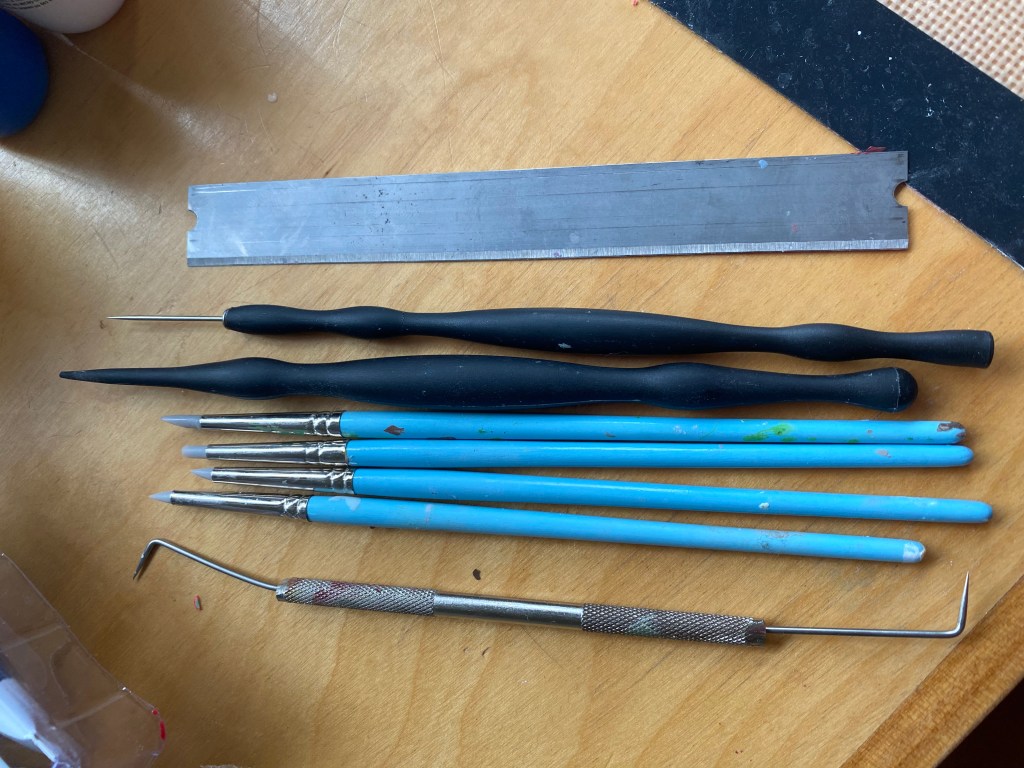
These are my tools. The razor blade is used constantly; the others as needed. These types of tools are readily available on Amazon and in craft stores.

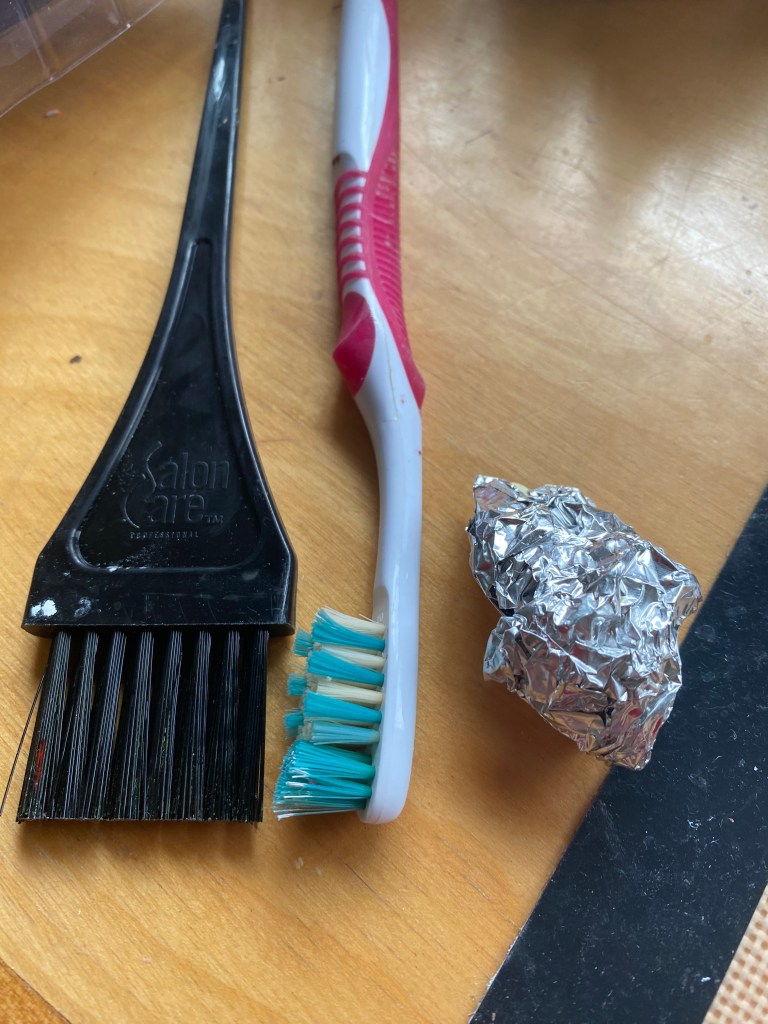
My “texturizers”. Essential and easy to find around the house.

My sanding block for finished pieces. This and small grit sandpaper are quite useful.

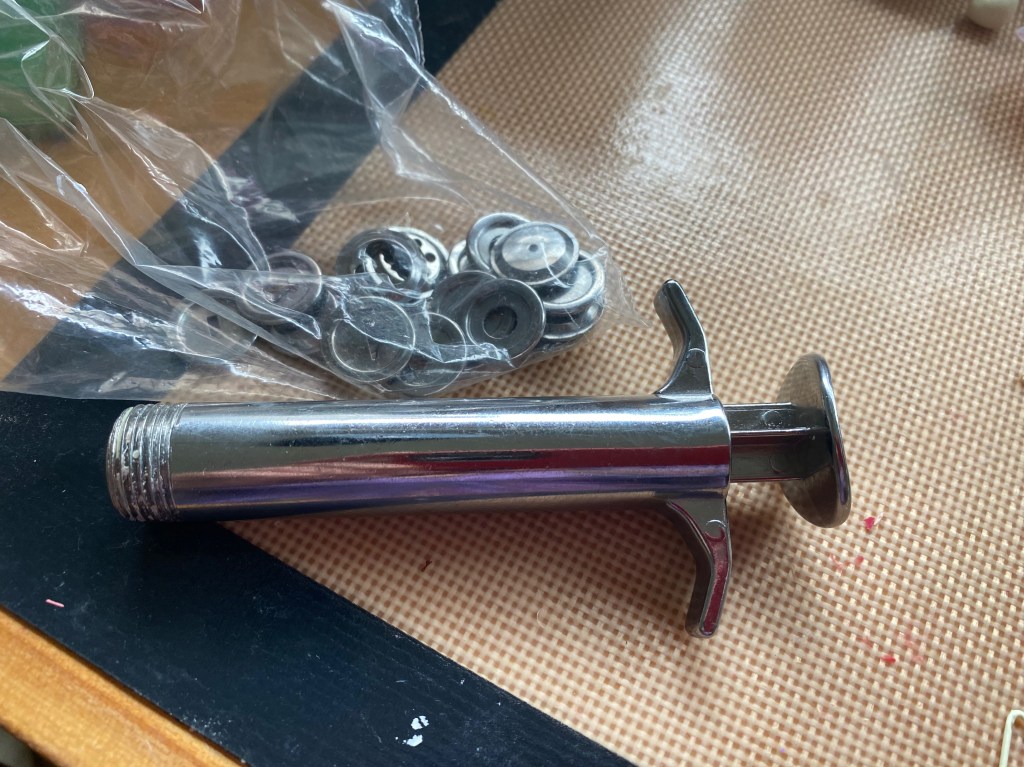
As I’m getting more experienced, I’m using this small extruder more frequently. It’s a pain to clean, but it makes such uniform shapes it’s becoming an important tool.

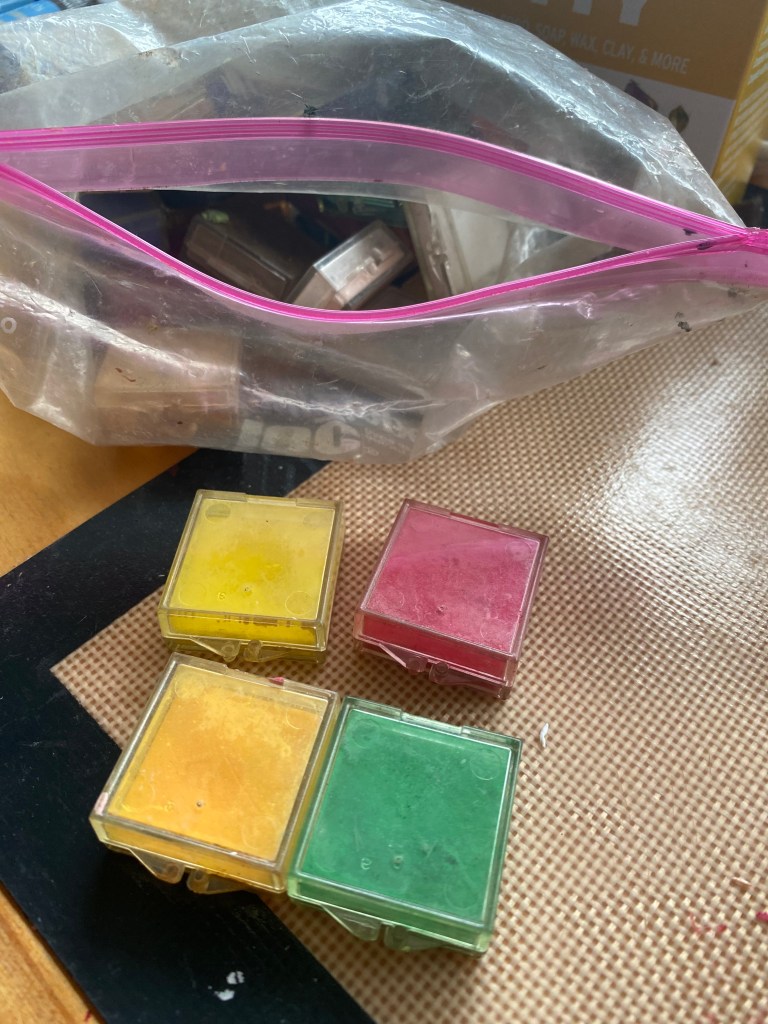
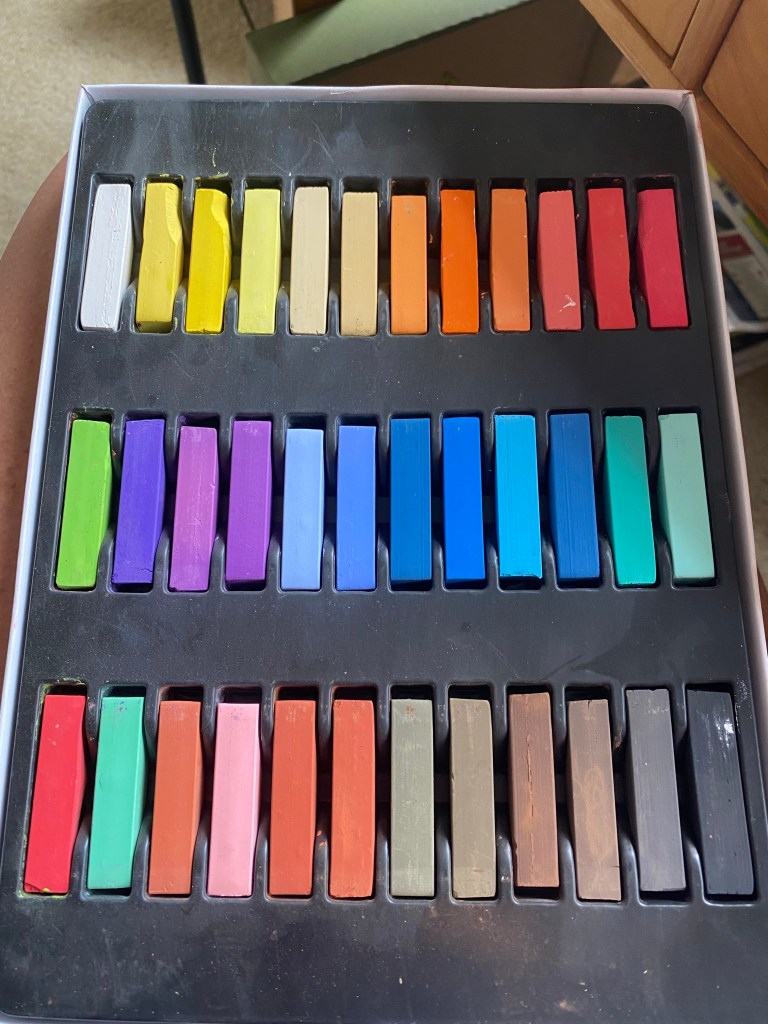
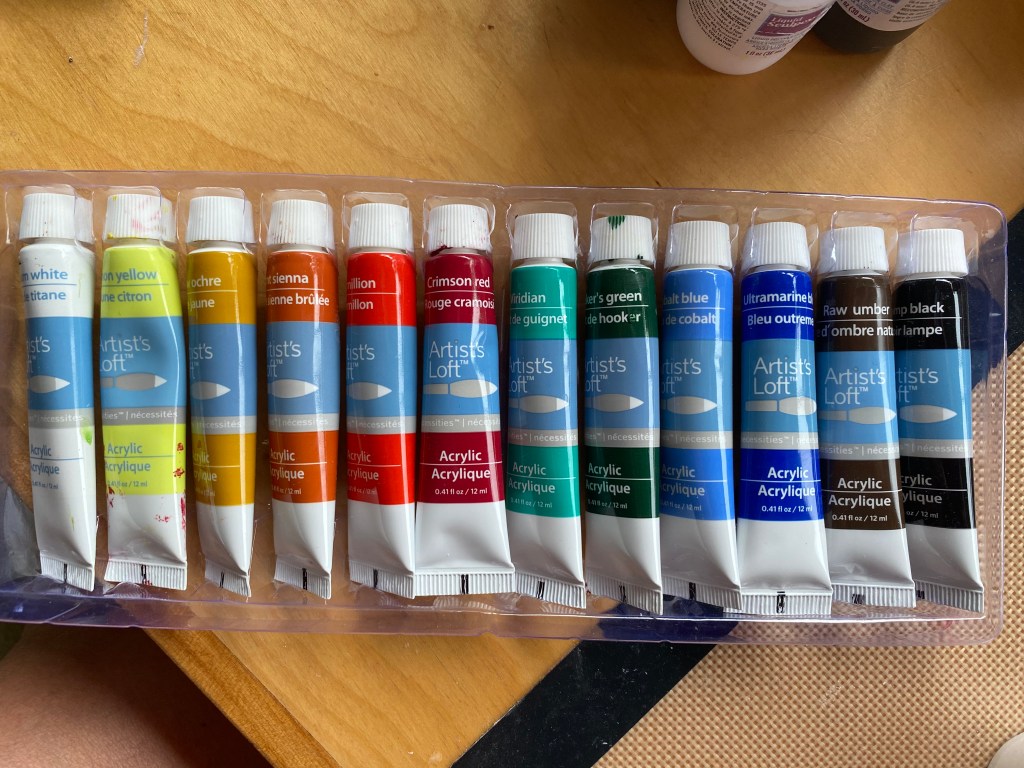
I add color to pieces with chalks, pastels and acrylic paint. The brands I use are inexpensive and easily available. (Add paintbrushes to your shopping list as well as they work the best for applying the colors.)

A pasta machine is very helpful for blending clay; flattening clay to uniform thicknesses; and conditioning /softening clay that is too crumbly to work with.

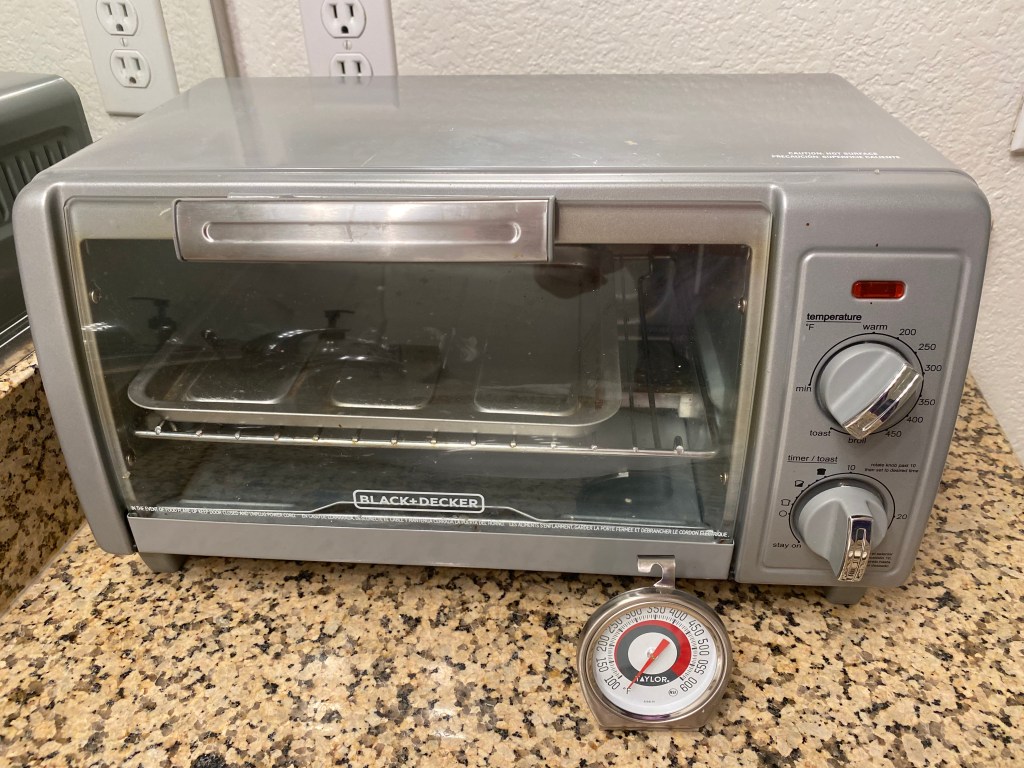
I use a dedicated toaster oven to bake my clay pieces. Everything I’ve read says it’s safe to use a regular oven, but I am overly cautious in our apartment so I set this up in the guest bathroom and use the exhaust fan when baking so fumes don’t permeate the rest of our place. I bought this toaster oven for $10 at the local Goodwill.

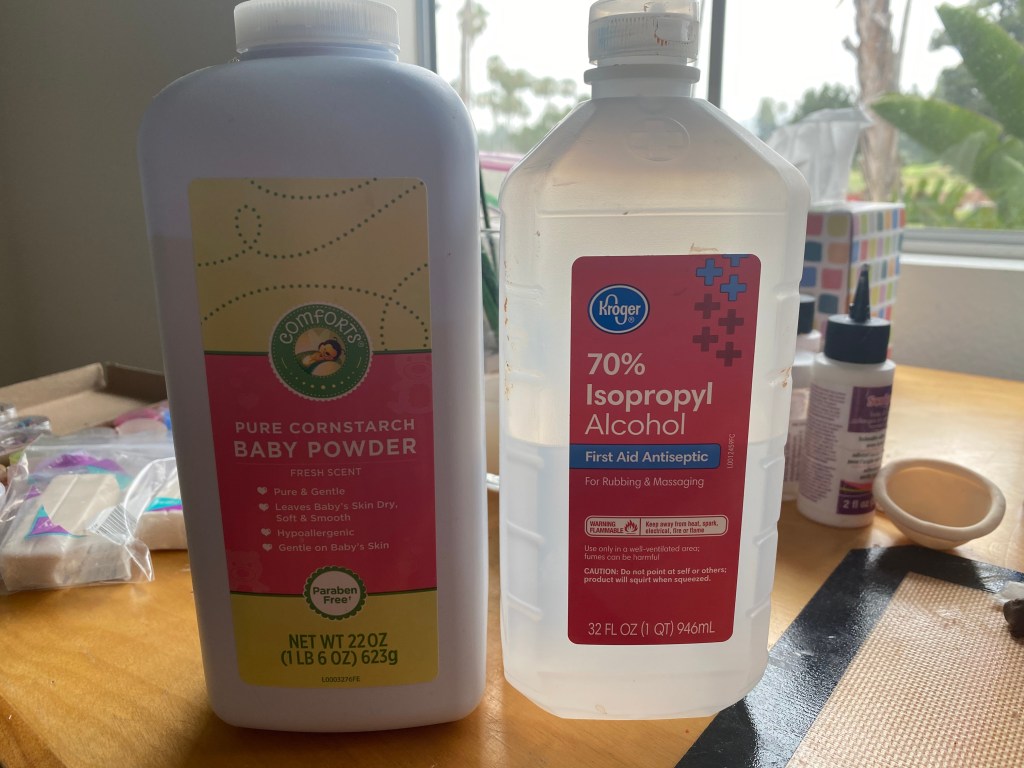
Finally, these two items are quite important. I use the alcohol CONSTANTLY as it’s the best way to clean up clay from surfaces, tools and hands. I used alcohol wipes for awhile but they are hard to find and too expensive. I now make my own with paper towels and alcohol. Trust me –DON’T START USING POLYMER CLAY WITHOUT THIS ALCOHOL ON HAND!

The baby powder (or cornstarch) is a must when molding or stamping clay as it prohibits the clay from sticking to another surface.

I hope this helps anyone who wants to try sculpting with polymer clay. There are lots of how-to books available that recommend these and other supplies and have great step-by-step instructions on how to use everything. I have also learned a lot watching YouTube videos. (It’s astounding how it is so much easier learning new things with the internet than it was just a few years ago!) Don’t hesitate to contact me with any questions–just write a comment below and I’ll get back to you asap.

Joan


Let Them Eat Cake!

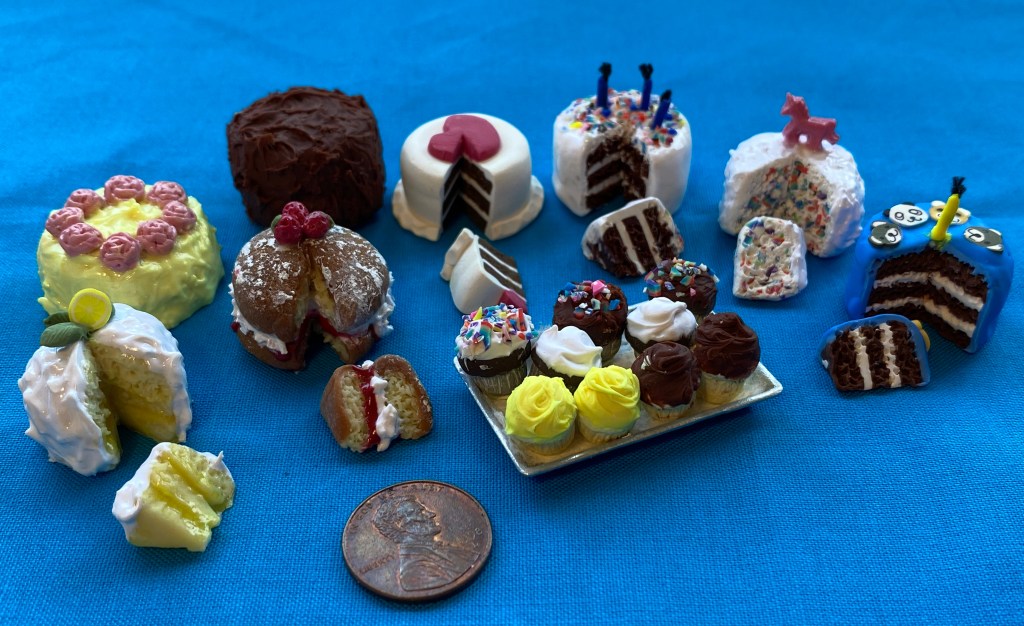
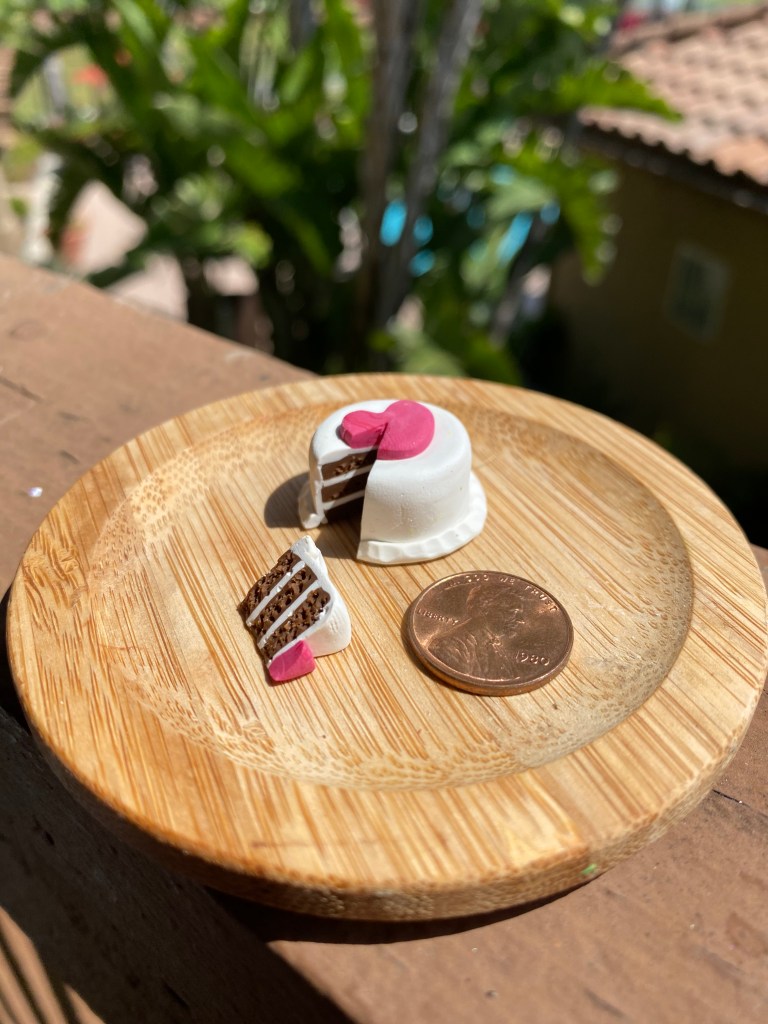
Continuing the baked goods theme (and coinciding with a multitude of family birthdays, including my own!), I focused on making mini cakes the last few days.

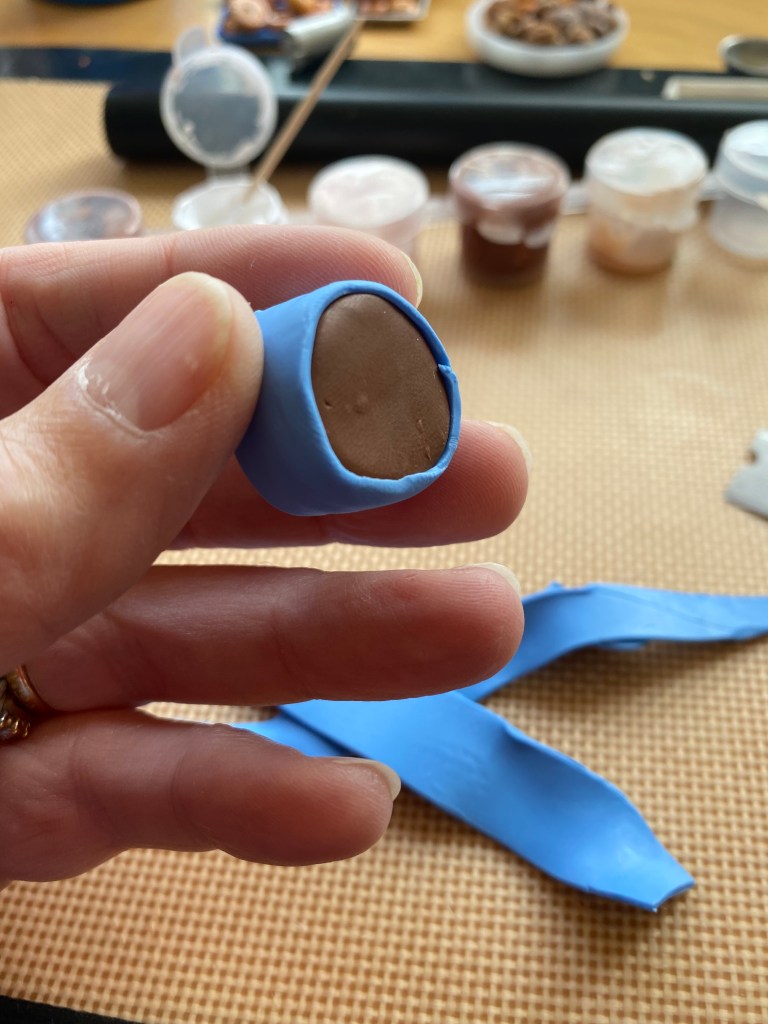
The basic process is as follows:

Each cake was made in a similar fashion, although on most of the cakes I chose to apply more “fluffy” icing (a mix of clay and translucent liquid) instead of the flat fondant look.

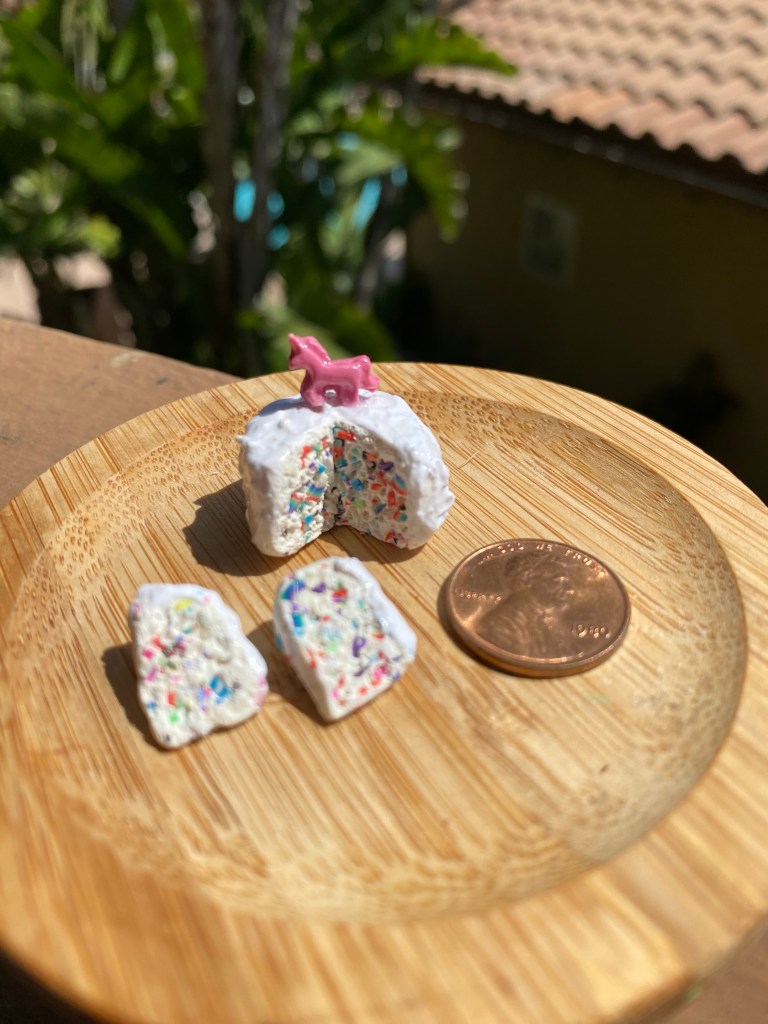
Baby Bear and Unicorn Sprinkles cakes.

Victoria Sponge and Lemon Curd cakes.

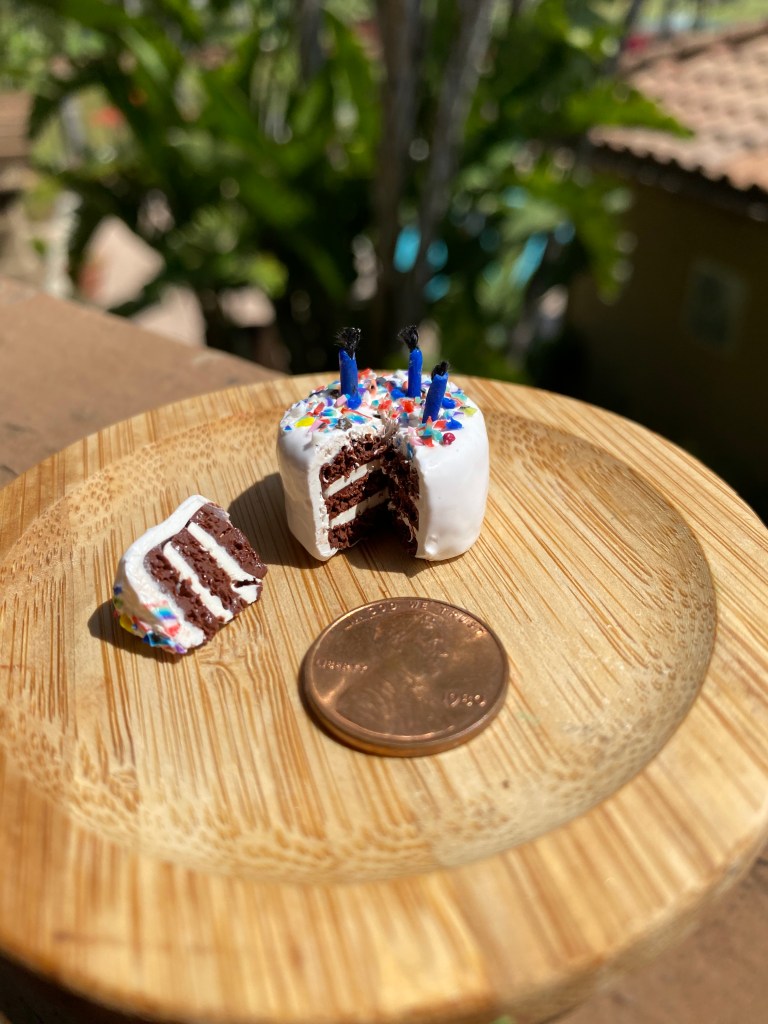
Birthday and Valentine’s Day cakes.

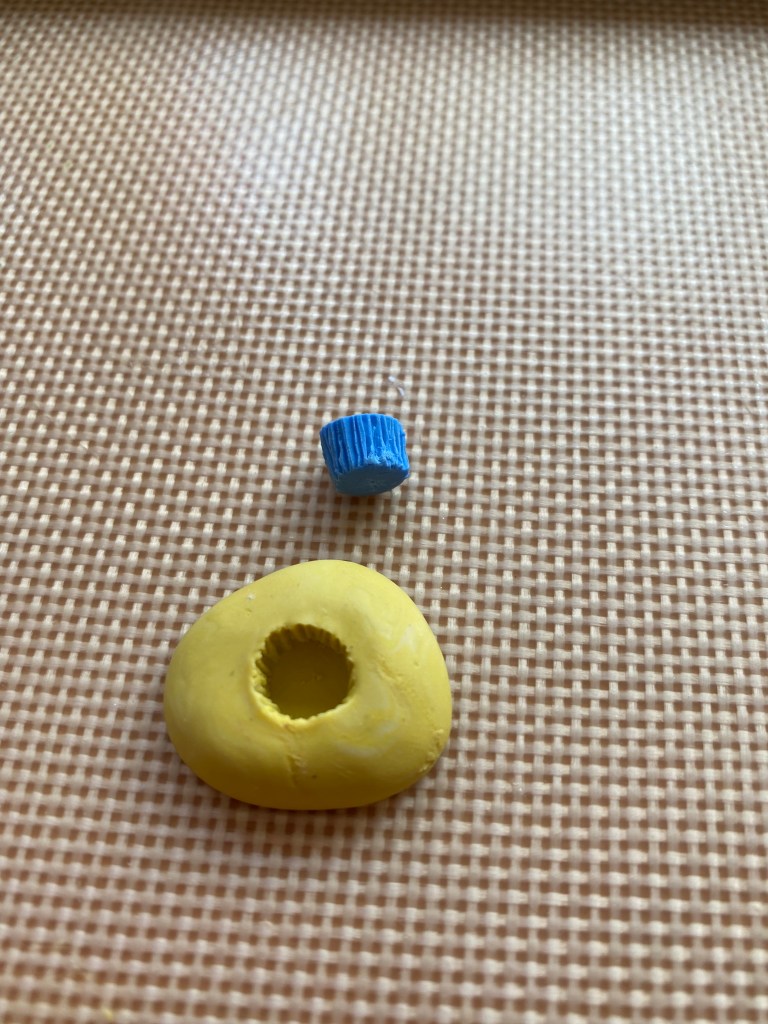
The cupcakes were made with a mold I mixed out of an epoxy. First I made a clay cupcake “prototype” and baked it. I then mixed the epoxy and quickly stuck the baked cupcake in the mold and allowed it to set. Once the baked prototype was removed, I used the mold to make identically sized cupcakes out of both chocolate and yellow clay. I painted the “liners” on each piece and then added the frosting to each cake.

Pie!

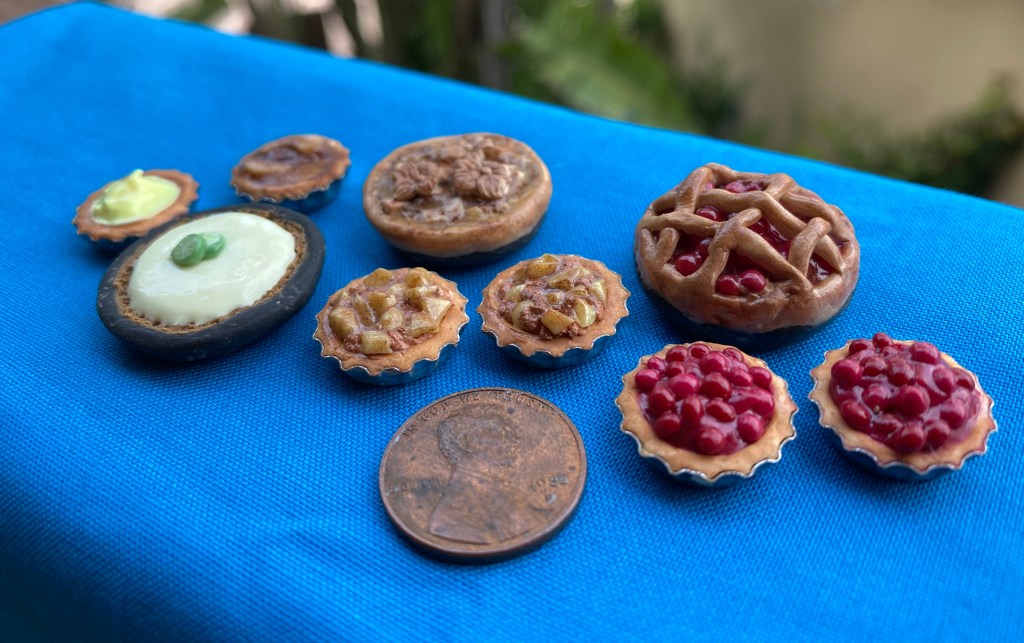
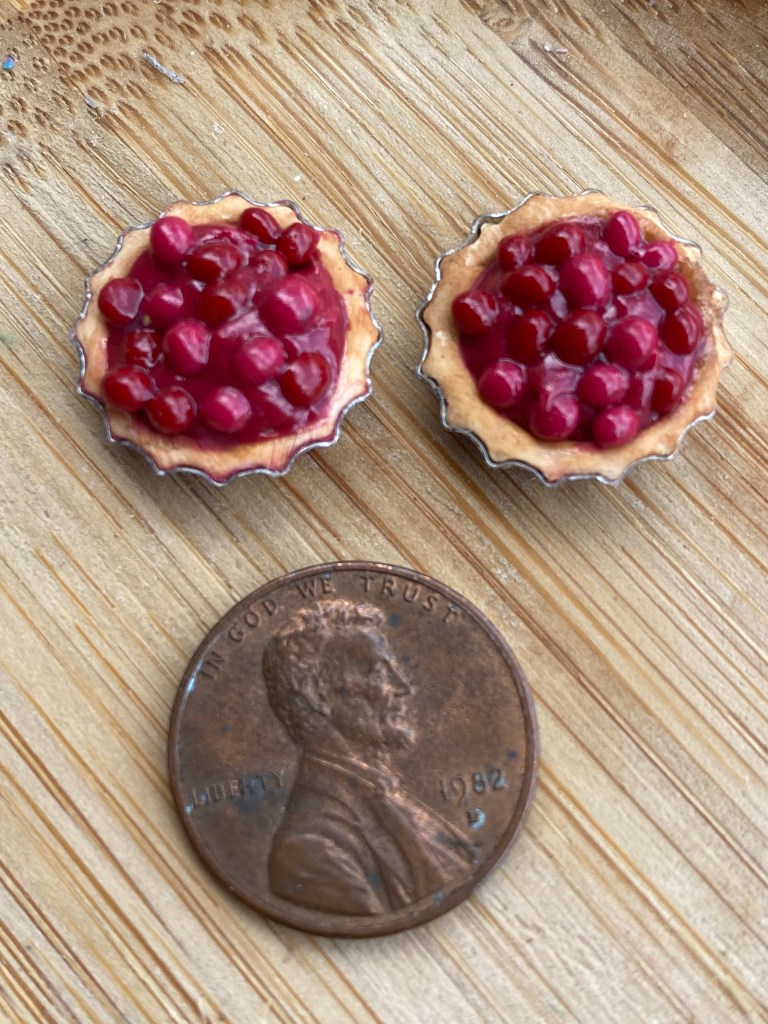
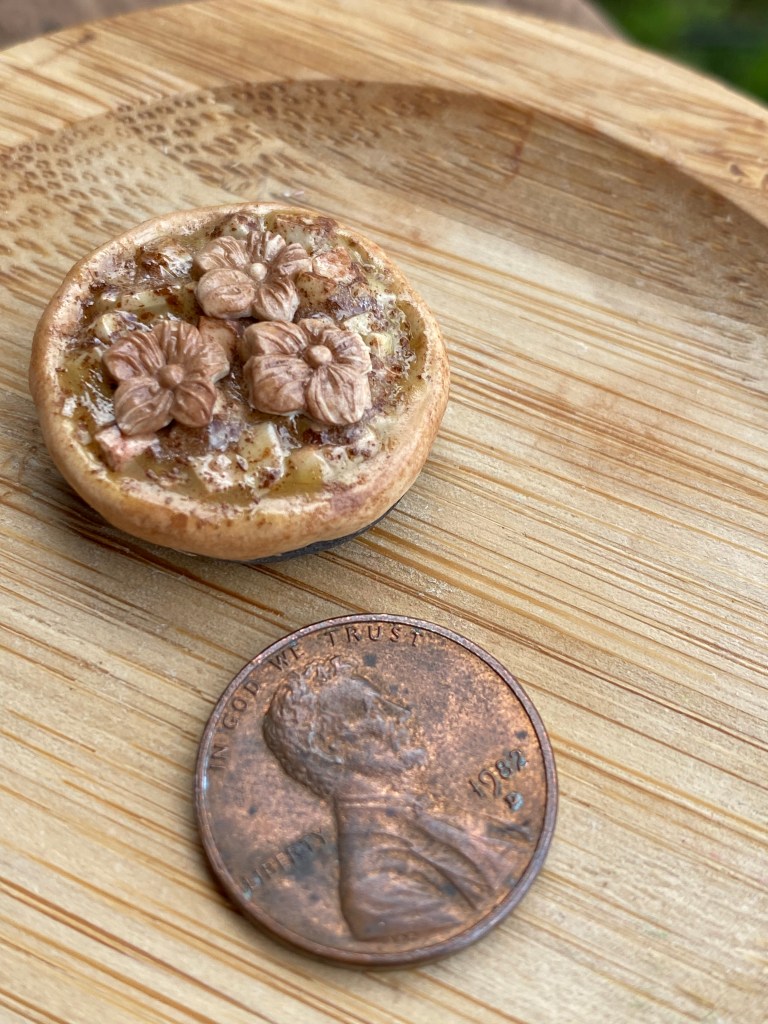
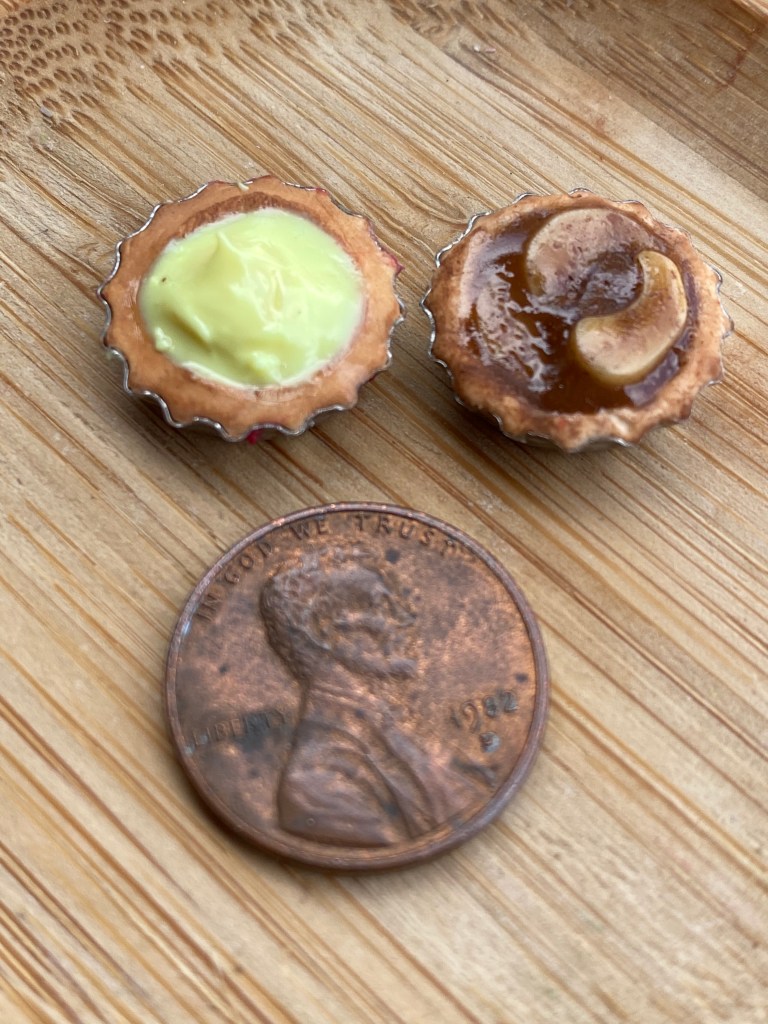
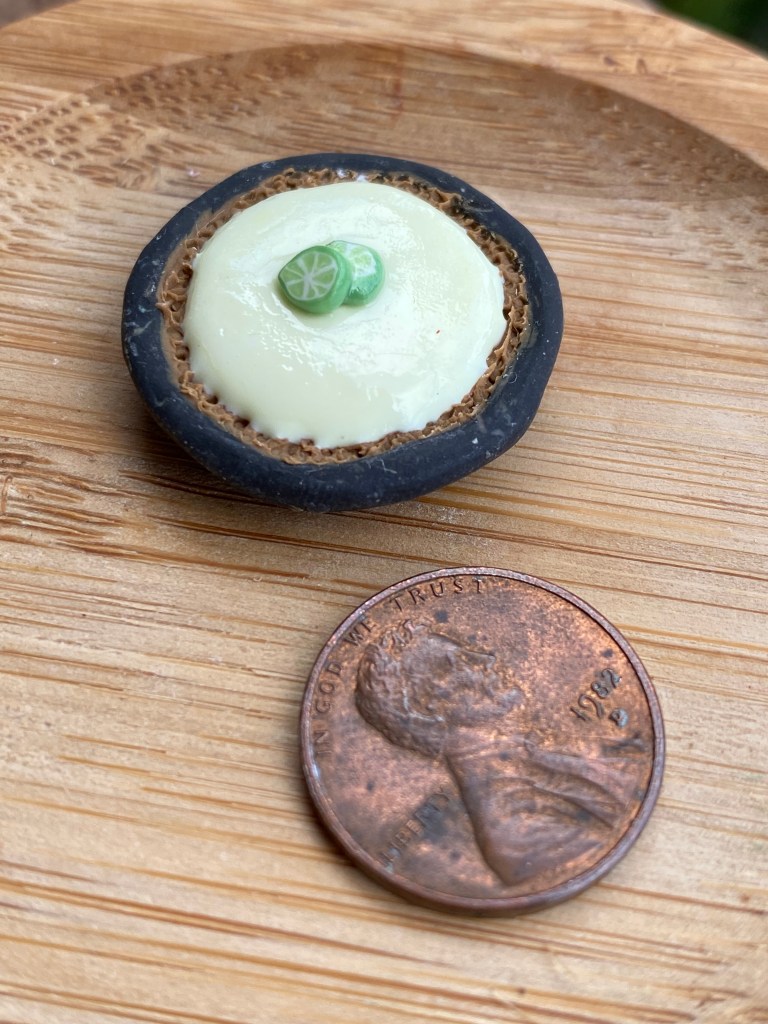
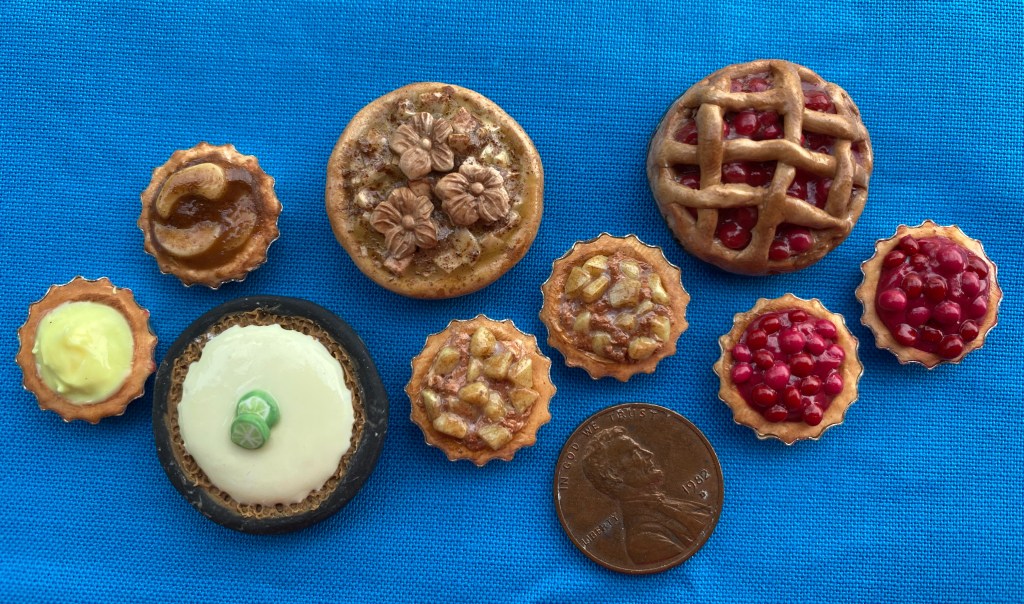
I made a variety of miniature pies today. I was on such a roll, I forgot to take pictures of my process. Basically I made and baked the crusts first, then added the appropriate colors of clay mixed with translucent liquid to each pie. Pieces of baked clay were added to represent the cherries, apples and pears.

Pies “cooling” on the porch.,

Cherry pie and cherry tarts.

Apple pie and apple tarts.

Lemon and pear tarts and a key lime pie. (I made the lime slices on the pie as well.)

Despite my frequent walks in the California sunshine, I swear I’m gaining weight just making this fake food every day.

Doughnuts and Cookies

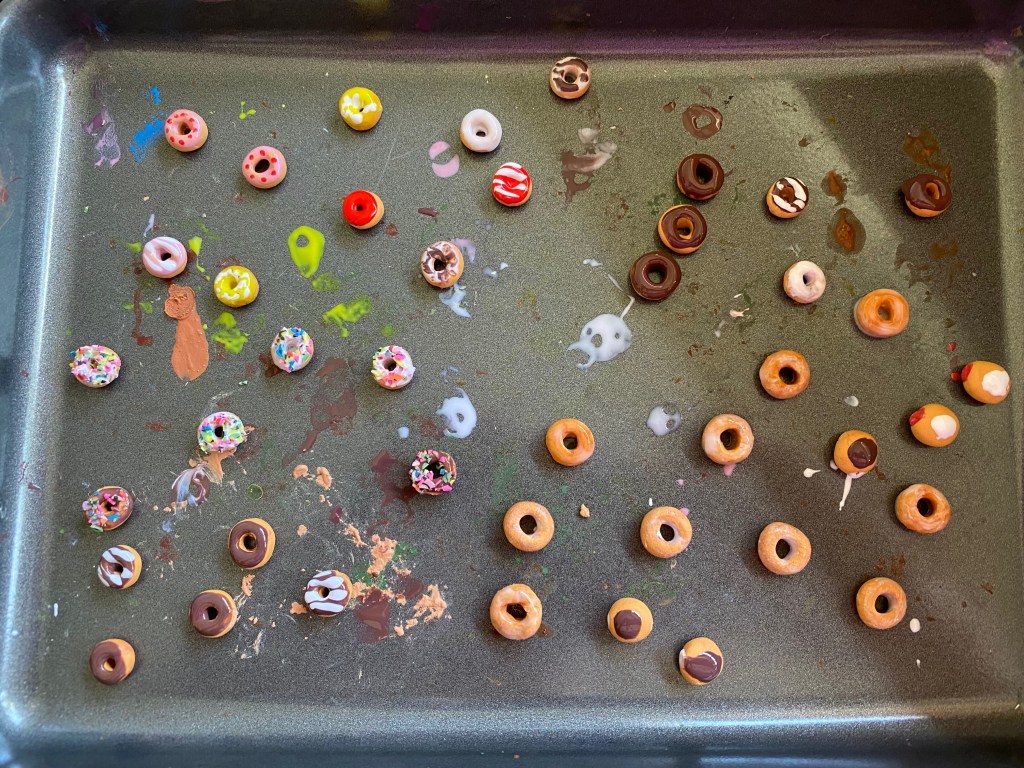
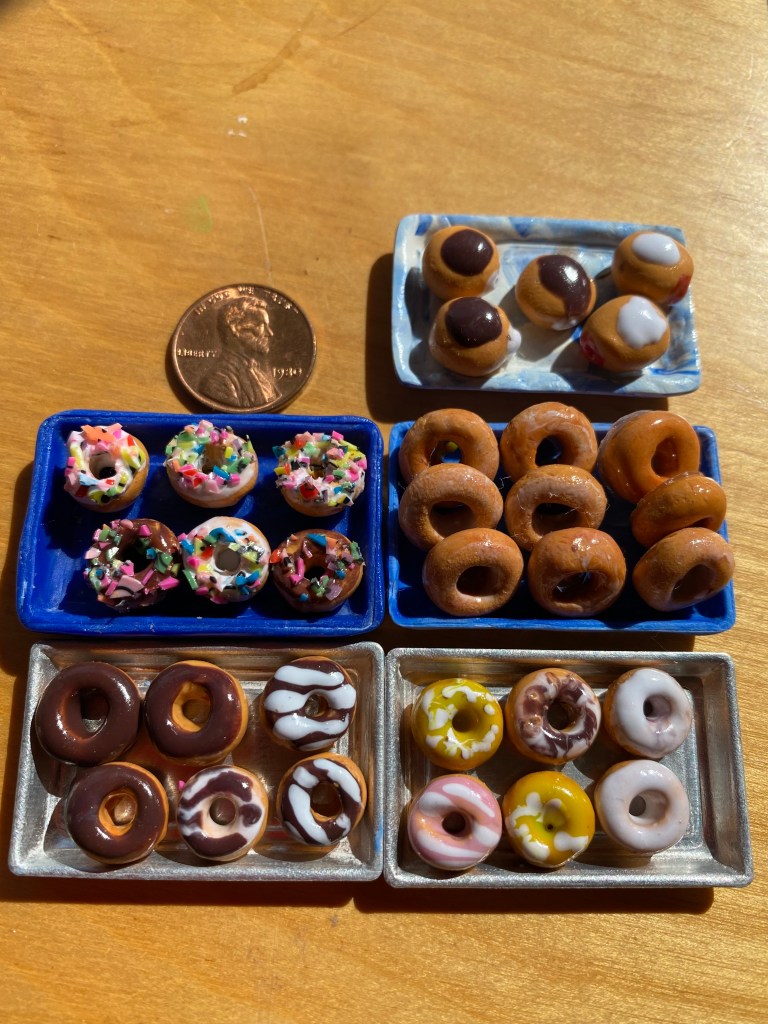
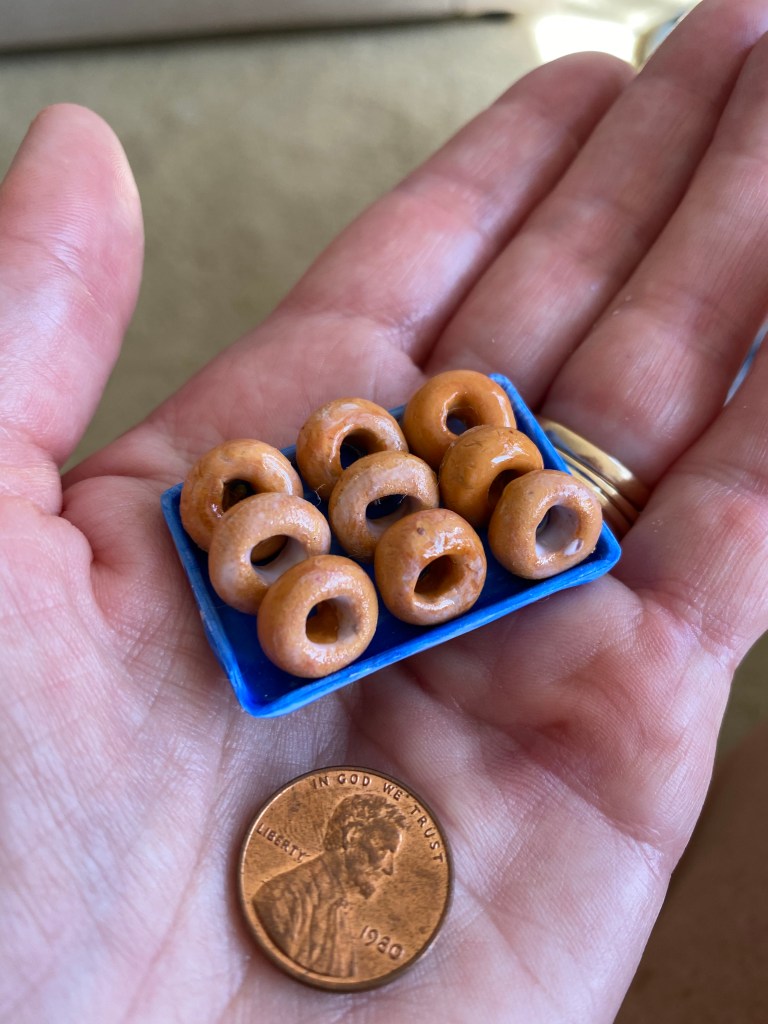
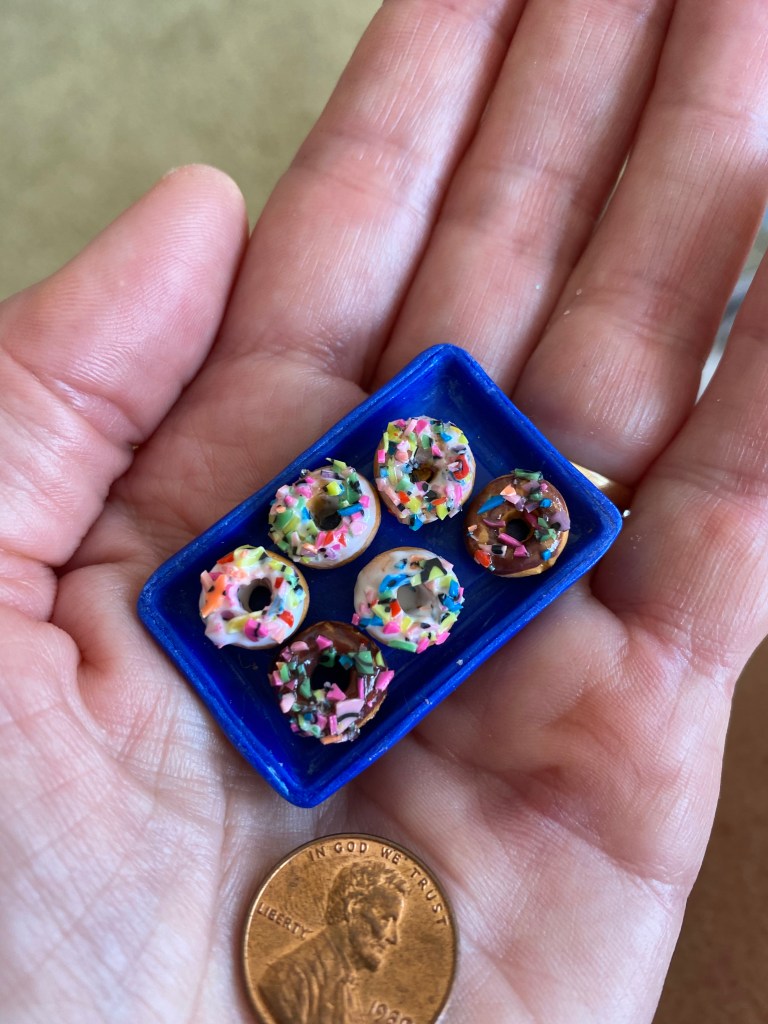
Making these doughnuts was so much fun–and quite easy. I simple poked holes in small balls of clay and rounded all of the edges. I texturized them with a toothbrush, baked them, then decorated them with various chalks and liquid polymer colors.

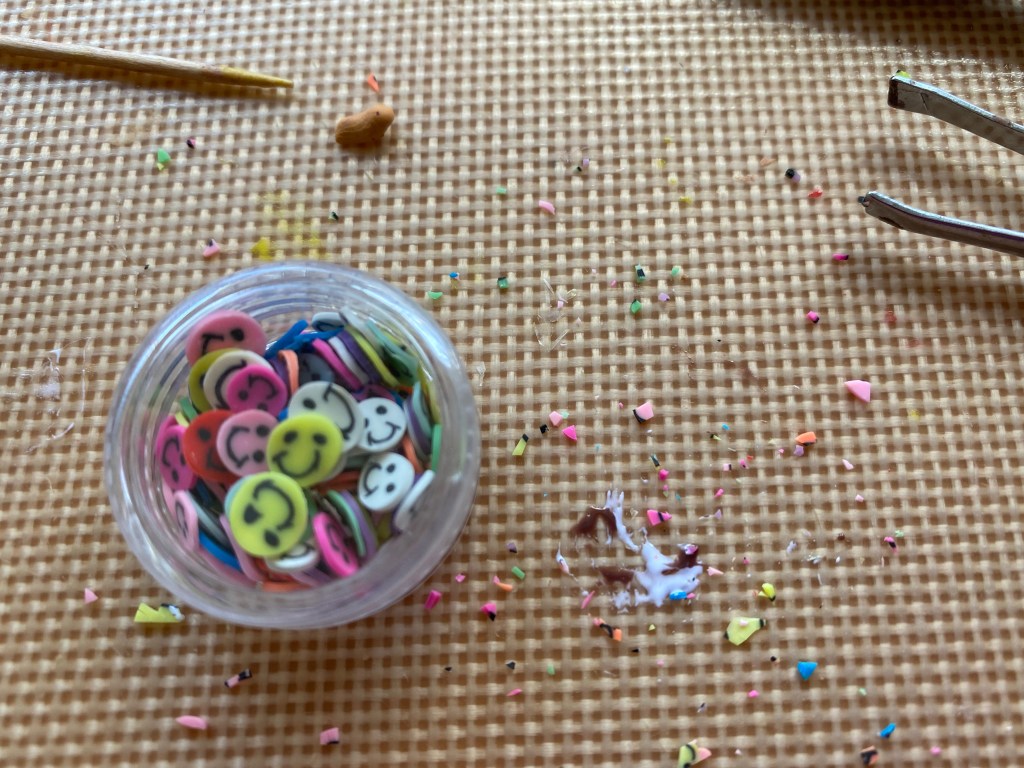
I used a razor blade to chop small resin decorations I bought at Michael’s into tiny pieces and used them for sprinkles.

When they were done baking, I used high gloss glaze on the icing and plain glazed donuts.

The cookies were even easier: small discs of various colors of clay each decorated differently.

Good enough to eat….if you are a pretend mouse.

Bread Day

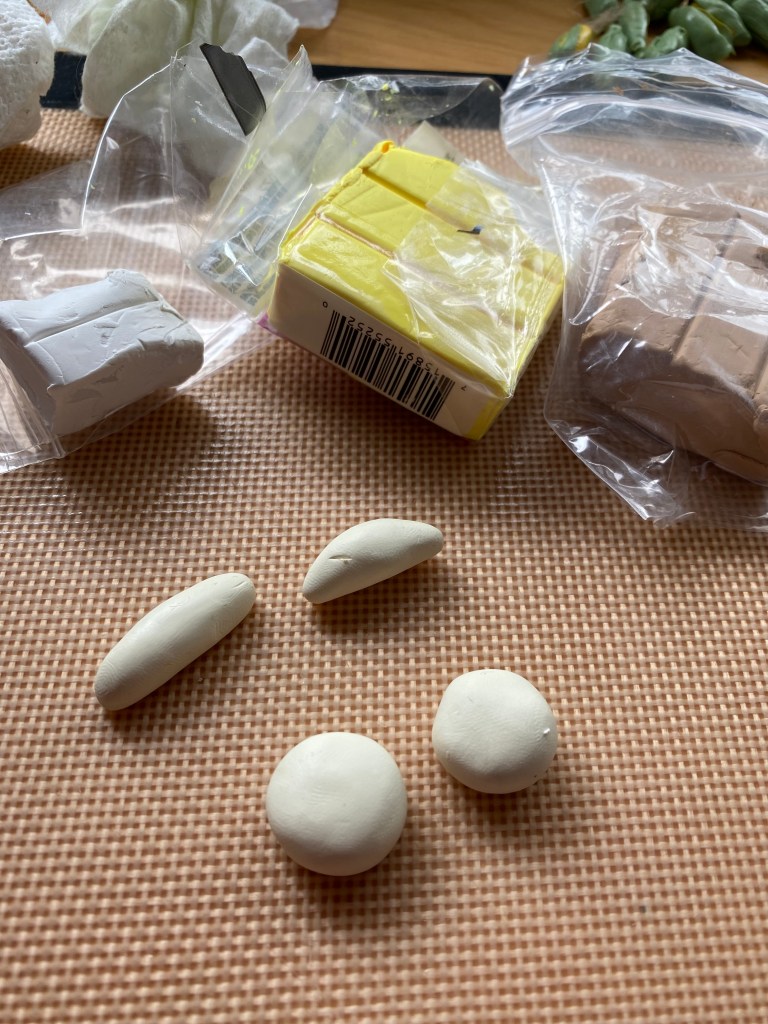
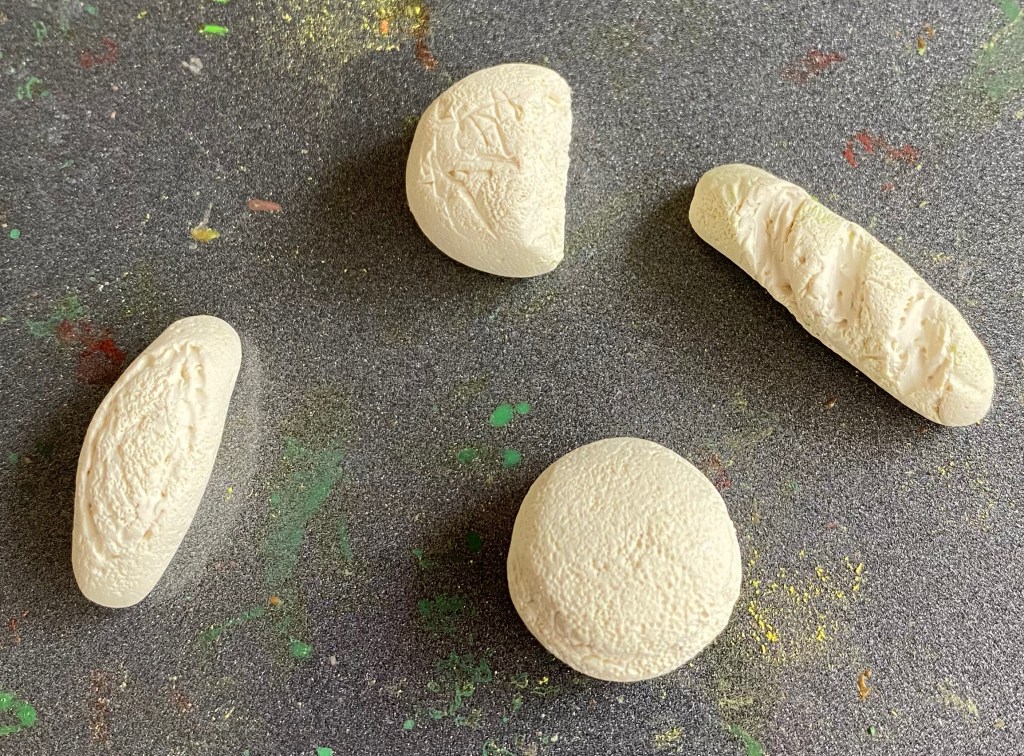
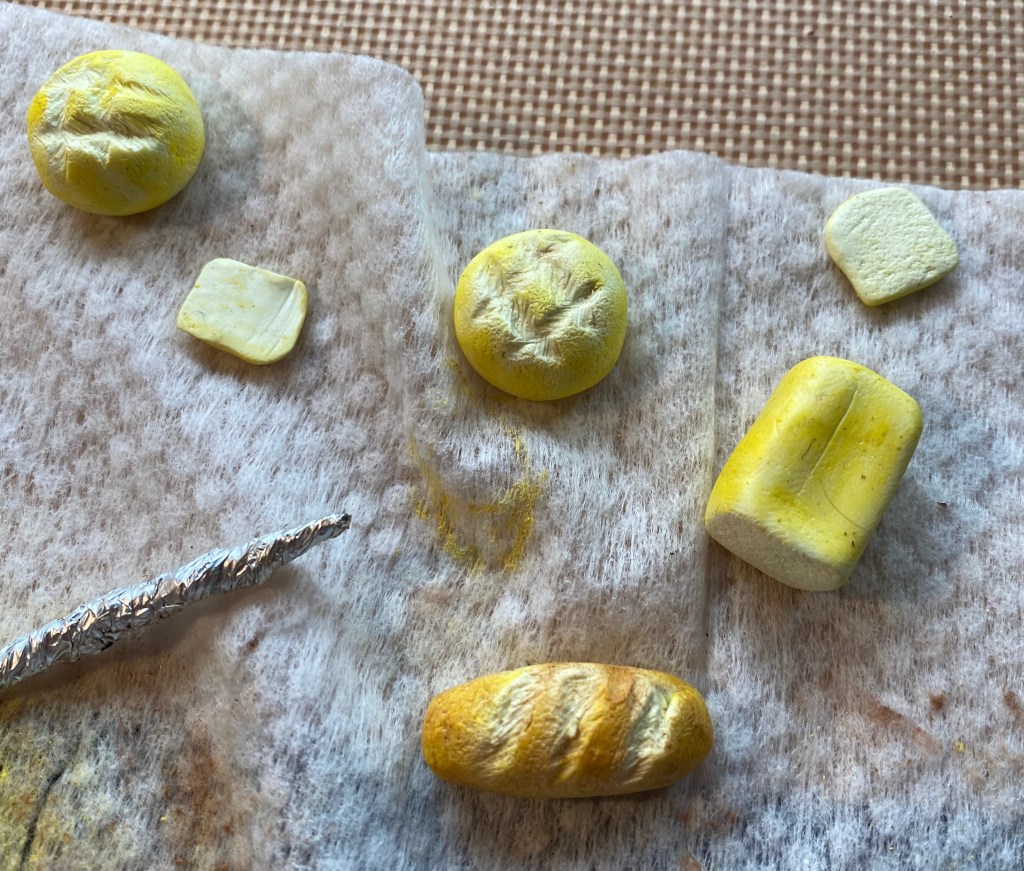
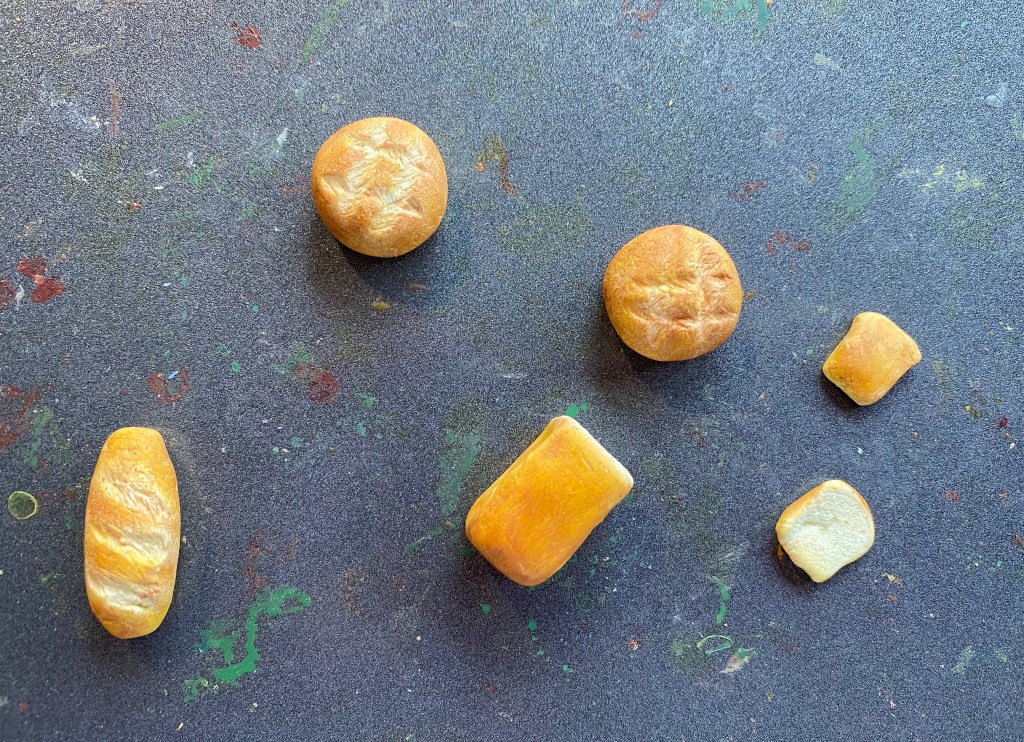
Today was a good day to make bread–miniature size! Of all of the small food I’ve made so far, this was one of the easier tasks. Once I had the right color of clay mixed together for the bread “dough”, I just shaped the loaves and texturized them both inside (when showing) and out with the strange assortment of tools I have here in California.

I then used used pastel chalks to color the loaves, layering colors ranging from yellow to dark brown, trying to mimic where bread would darken in the oven. Liquid polymer with small lumps of red clay made realistic jelly.

The results are pretty good. This particular project kept me hungry all day!